
Cajun Gumbo
This version of cajun gumbo dials up all of the dark, inky, cajun flavors to the highest level without cheffing things up too much. The focus is on tasteful choices and nailing the classic French techniques that are the foundation of this very unique style of cooking.
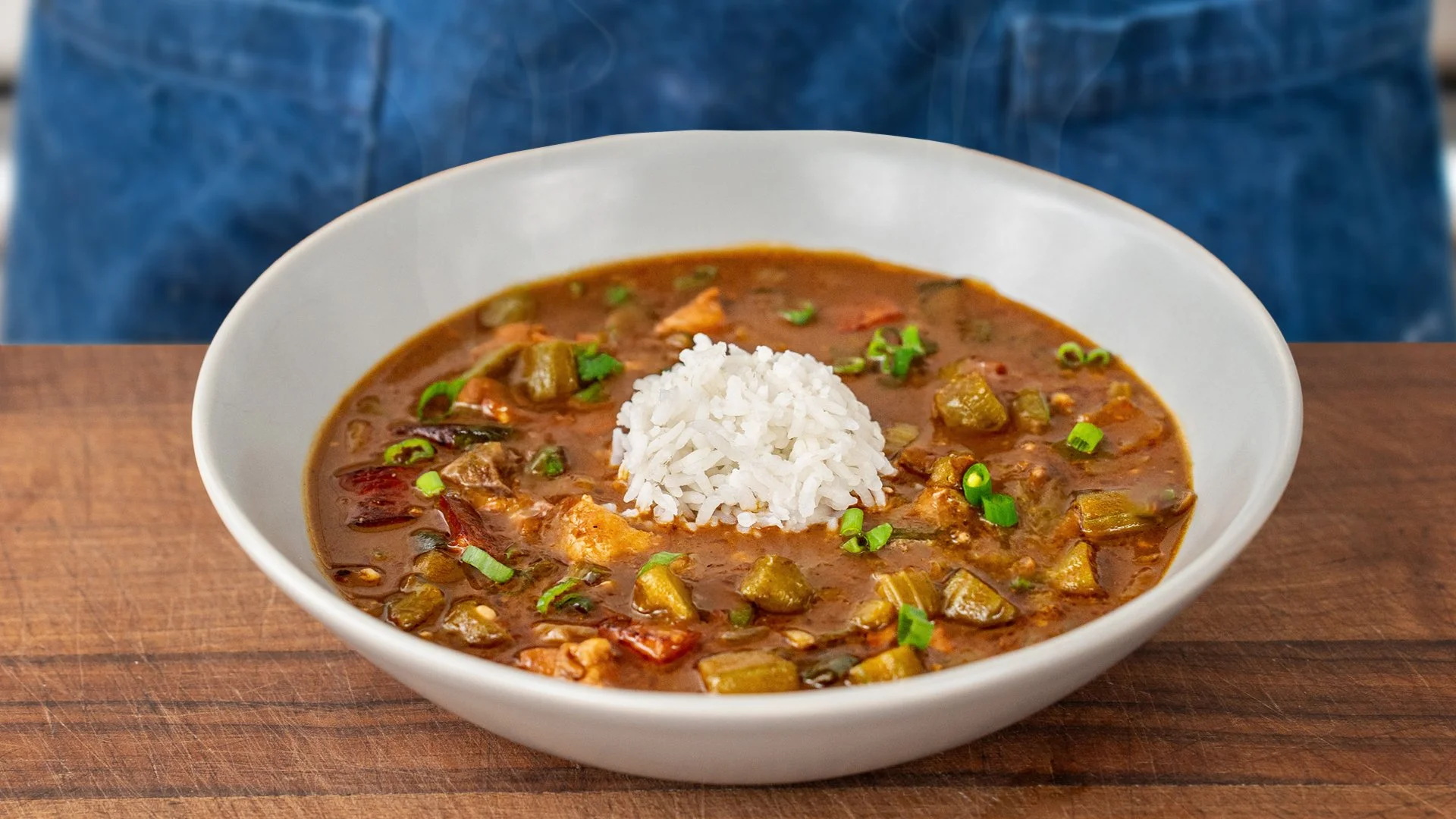

What Makes This Gumbo Recipe Special
Gumbo is a dish with a lot of room for error, mostly because it relies on so many traditional French-style cooking techniques. If you’re not paying close attention, you CAN ruin it. But my version is all about properly cooking every component. That means taking an aggressive approach to the dark roux, braising the chicken deliberately instead of boiling it so it stays rich and tender, and cutting and cooking the mirepoix or “trinity” in a way that preserves texture while building maximum flavor in the base. Finally, the gravy is seasoned with precision so all those deep roux notes come through clearly.
The result is a gumbo with real substance. It’s not your bar and grill bowl of hot and spicy brown. This version hits every texture the dish should have while delivering all the deep, exotic flavors that make Cajun cooking so special.
Brian’s Pro Tips
Take the Roux Deep - Your target is a color just darker than melted milk chocolate, but not as dark as dark chocolate. I like to take it to where I’m just starting to get a little scared of it. As it darkens, lower the heat to avoid burning. A darker roux brings deeper, more interesting flavor so push it a little further than you might be comfortable with.
Fortified Stock - Boxed stock tastes weak and has no body. Whisking in unflavored gelatin and chicken bouillon paste simulates the richness and mouthfeel of a stock that’s been on the stove for hours. I use this move all the time to approximate slow simmered home made stock.
Searing Meats in a Separate Pan - Browning the chicken and andouille in a nonstick lets you sear while the roux cooks (if you can manage both), which makes the process smoother. If you did it in the Dutch oven, you’d need to clean it out before starting the roux so the browned bits don’t burn. Washing a heavy dutch oven 2 times in one day is annoying.
Toasting the vegetables directly in the roux - Instead of sautéing the vegetables separately, add them straight into the hot roux. This “arrests” the roux, stopping it from getting darker, and gives the vegetables a deeper, almost fried-in-oil flavor which is much more delicious than just simmering them in the liquid until tender.
Add stock gradually, not all at once - Pouring in a cup at a time hydrates the flour in the roux more evenly, so it incorporates smoothly without clumping. It also heats up the liquid faster, which means you’re at a simmer sooner.
Use an ice cream scoop for the rice - If you have it, a round scoop of white rice dropped right into the center of the bowl gives you a classic gumbo presentation and a good rice to gravy ratio in every bite.
Key Ingredients
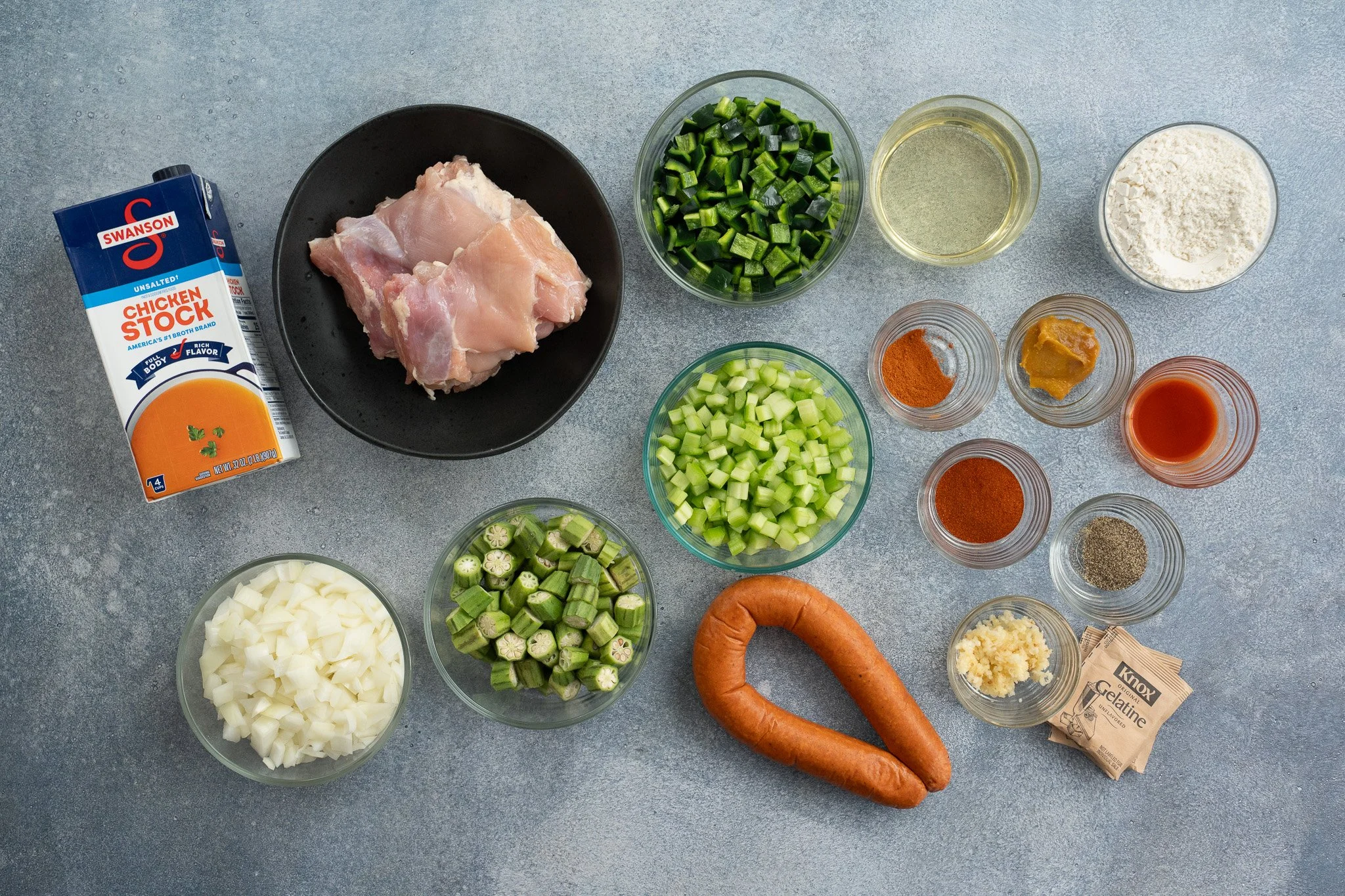
Find the full list of ingredients, amounts, and instructions in the recipe section below.
Chicken Thighs
Thighs are the only option in my opinion. Chicken breast gets dry and ropey when braised like this. To maximize texture and flavor, season the chicken thighs with salt 10-15 minutes ahead of time if you can. It improves flavor, helps retain moisture, and makes the meat more thoroughly seasoned all the way through.
Andouille Sausage
Andouille brings the smoke and spice that makes this taste like real Cajun gumbo. If you can’t find andouille, kielbasa is your best substitute. It won’t be identical, but it’ll get you in the ballpark. Don’t swap in Italian sausage. It’s structurally a totally different category of sausage and the anise/fennel flavor will stand out in a bad way.
Poblano Peppers (Instead of Bell Peppers)
Green bell peppers are a C tier vegetable at best. They are a little bitter, watery, and lack any meaningful flavor in my opinion. Poblanos bring great green chile flavor along with mild heat. This is not a tradish ingredient and purists will be mad, BUT they serve the same purpose as green bells and do it better.
Okra
Gumbo is traditionally thickened with a combination of roux, okra, and/or filé powder—and you really want at least two of those working for you. Okra is delicious in this recipe and I highly recommend keeping it in. If you genuinely can’t stand it, you can skip it as long as you add about 3 tablespoons of filé powder at the end (off the heat) so the gumbo still thickens properly.
RECIPE
Prep time: 30 Minutes | Cook Time: 90 Minutes | Yield: 8-10 Servings
Ingredients
Ingredients
225 g (1 3/4 cups) all-purpose flour
225 g (1 cup) neutral oil (vegetable or canola)
400 g (3 medium) onions, small dice
250 g (4-5 ribs) celery, small dice
250 g (2-3 large) poblano peppers, small dice
200 g (2 cups) okra, sliced 1/4–1/2 inch thick
25 g (6-8 cloves) garlic, minced
1500 g (6 1/2 cups) chicken stock
35 g (2 Tbsp) Better Than Bouillon chicken base
21 g (3 packets) unflavored gelatin
10 g (1 Tbsp) paprika
3 g (1 1/2 tsp) cayenne pepper
3 g (1 1/2 tsp) black pepper
10 g (2 tsp) Crystal hot sauce
Salt to taste
900 g (2 lb) bone-in, skin-on chicken thighs
380 g (13 oz) andouille sausage, quartered and sliced
For Serving
300 g (1 1/2 cups) long grain rice
350 g (1 1/2 cups) water
5 g (1 tsp) salt
Sliced scallions for garnish
Instructions
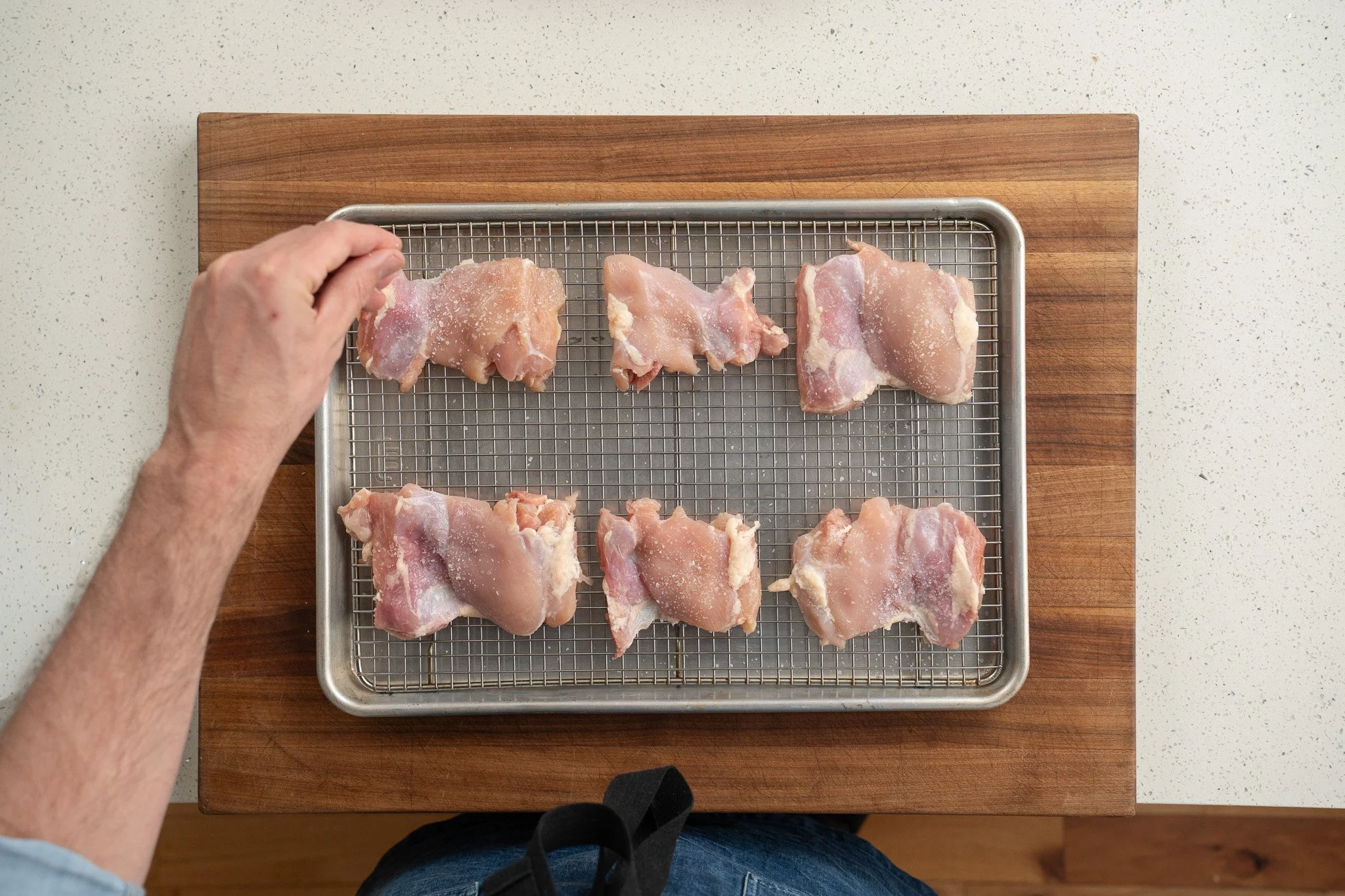
1. Season and Prep the Chicken. Season your chicken thighs generously with salt on both sides and let stand for at least 10 minutes but preferably 30. This will significantly improve the texture, flavor, and juiciness of the meat.
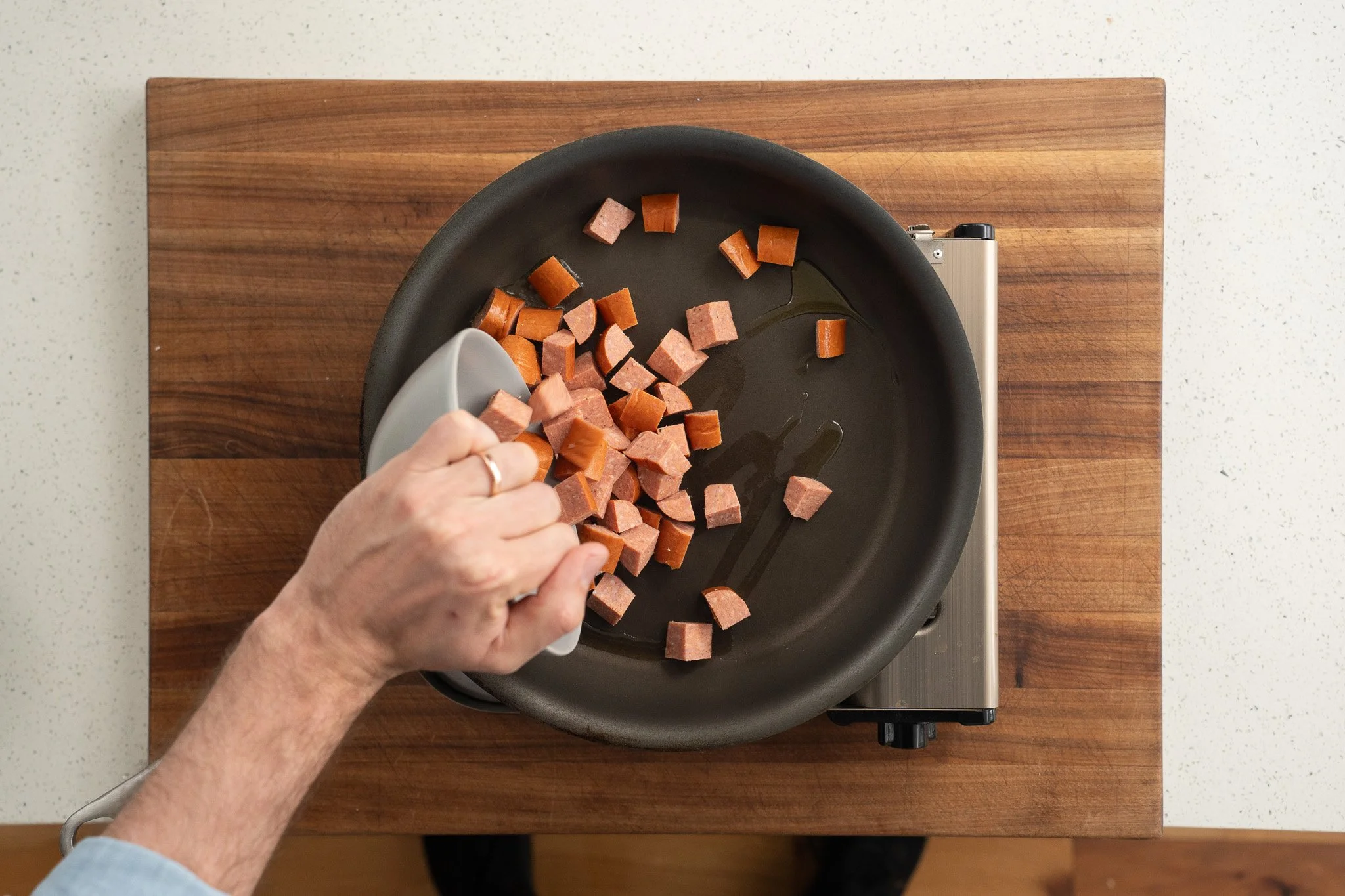
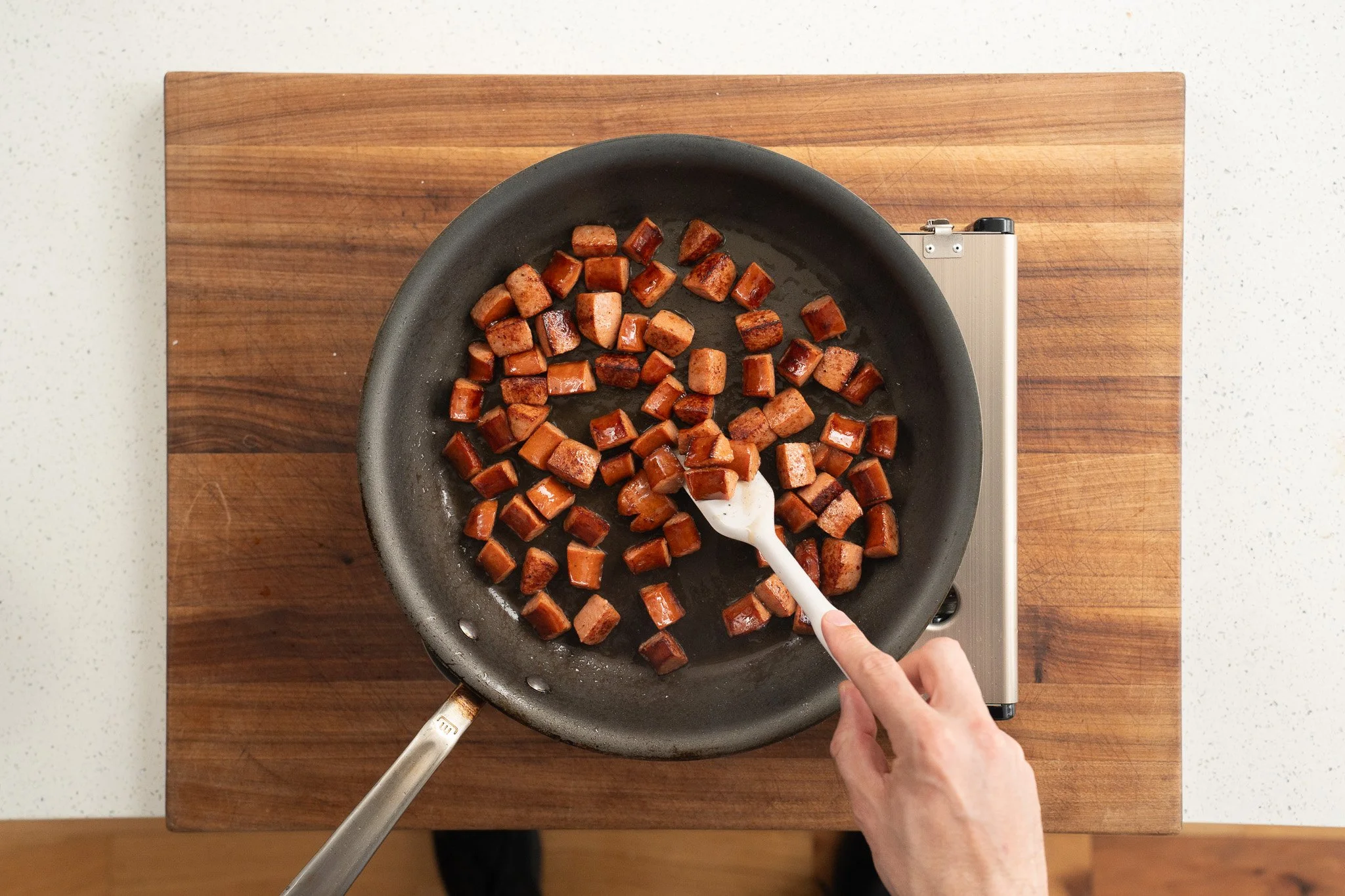
2. Sear the Andouille and Chicken. Heat a nonstick skillet over medium-high heat. Cut the andouille into 1” cubes and cook until it’s starting to get some nice brown color on the edges. Remove it from the pan and set aside.
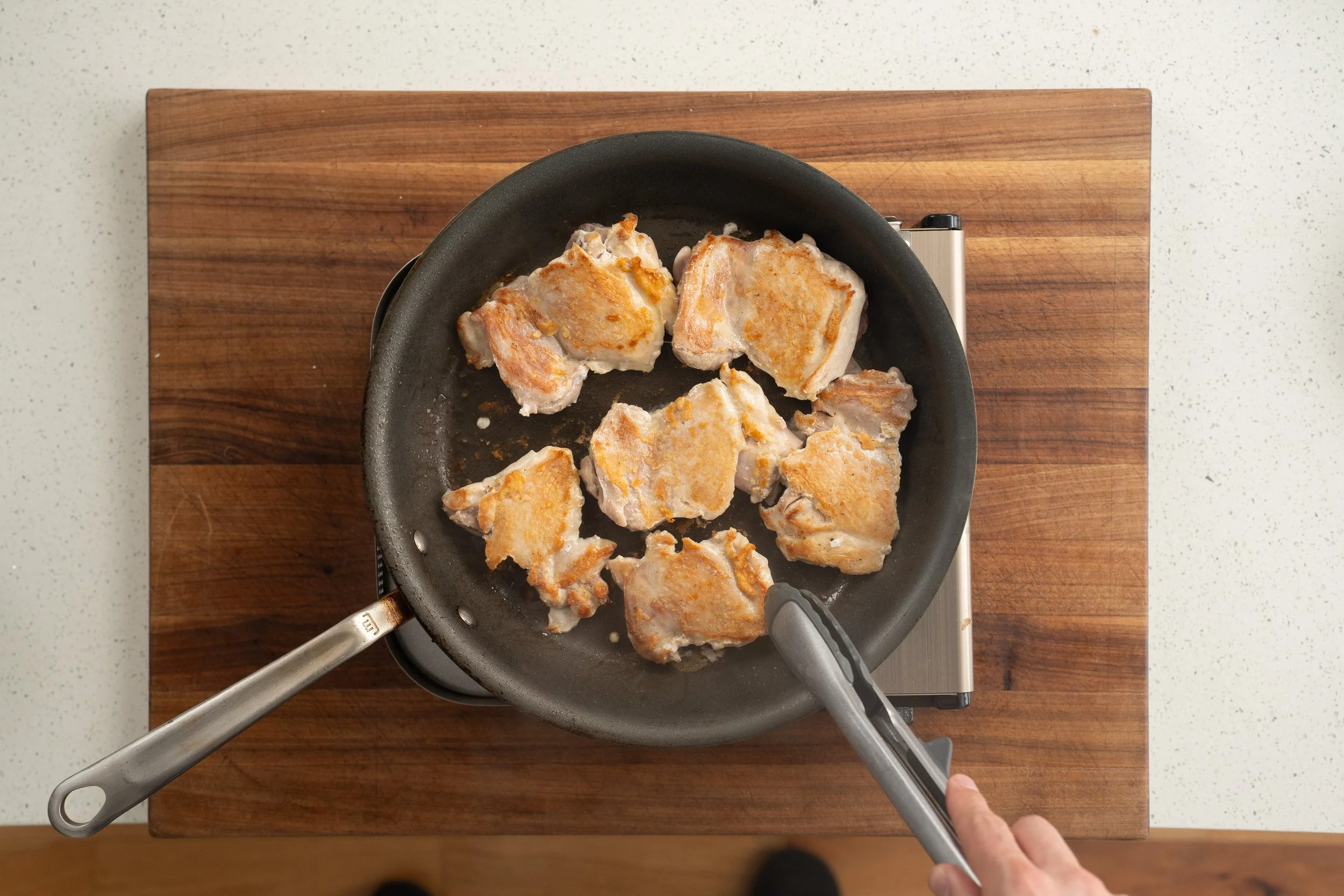
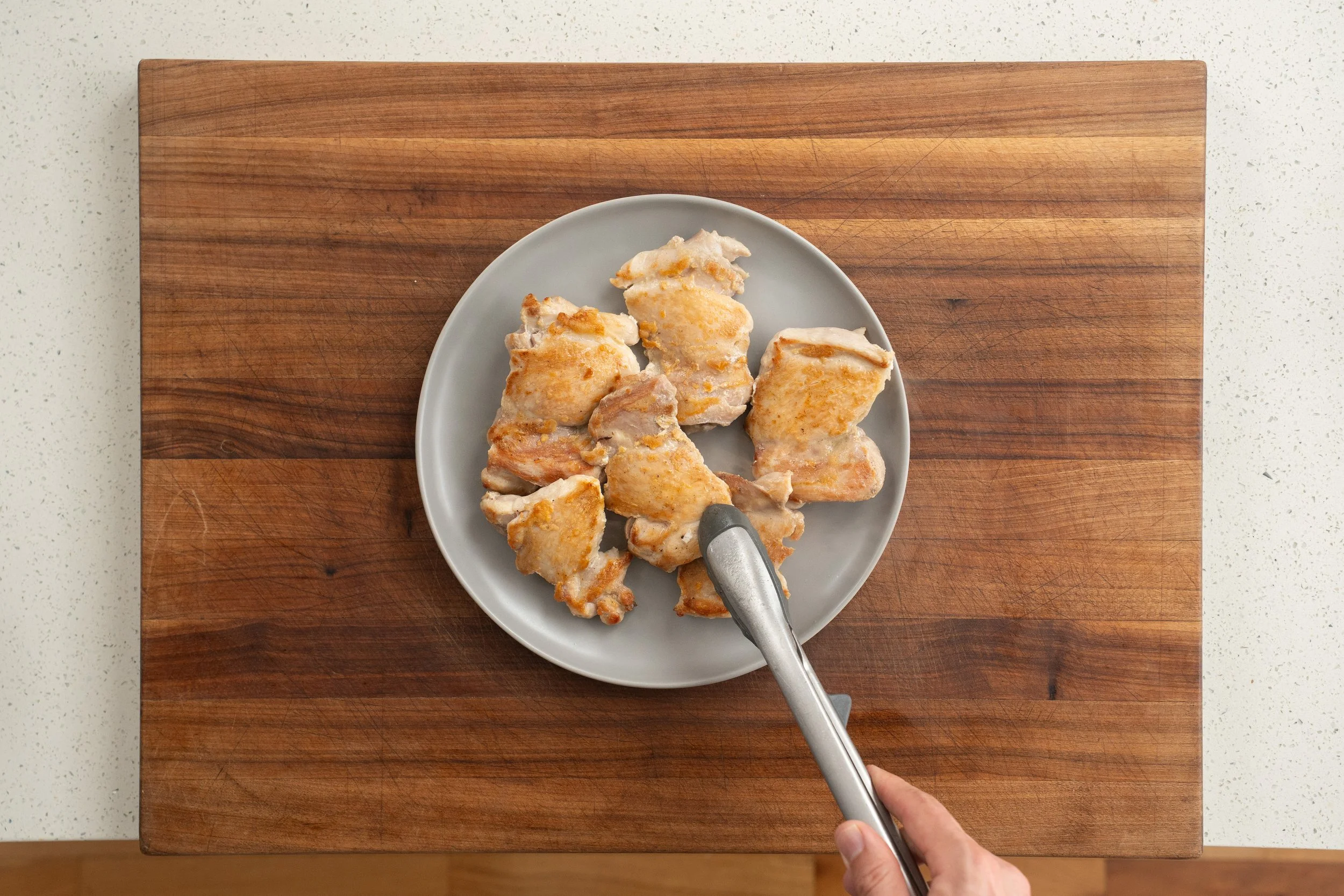
3.In the same pan with the rendered sausage fat, add the chicken thighs and cook over medium heat until golden brown on the first side, or about 5-6 minutes. Flip and cook another 4-5 minutes or so. You’re not cooking them all the way through, just building color, setting the protein, and rendering out some of the fat. Once seared, set aside on a plate.
4. Prep All Your Vegetables*. While the meat is searing (or before if you aren’t a multi tasker), dice your onion, celery, and poblanos into a medium dice. Slice the okra into 1 inch rounds. Mince the garlic. Feel free to combine the onion, celery and poblano.
*You CAN cut these veggies while the roux cooks, but only do that if you’re comfortable with the process and capable of some multi-tasking. Roux can burn quickly if you aren't paying attention and starting over sucks.
5. Make the Roux. In a large Dutch oven, combine 225g of neutral oil and 225g of all-purpose flour. Set the heat to medium and start stirring. You’re going to be here for about 25-50 minutes so settle in.
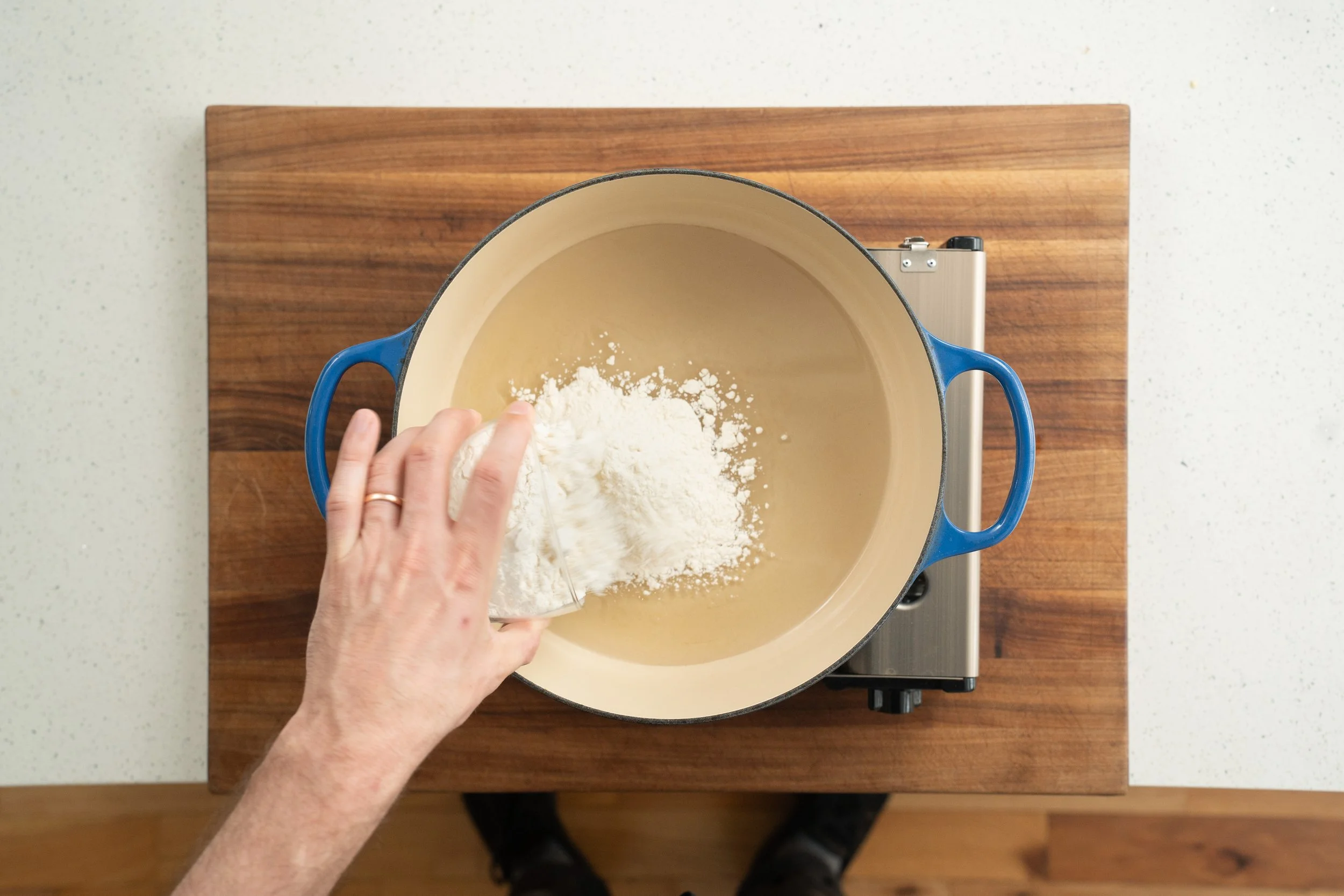
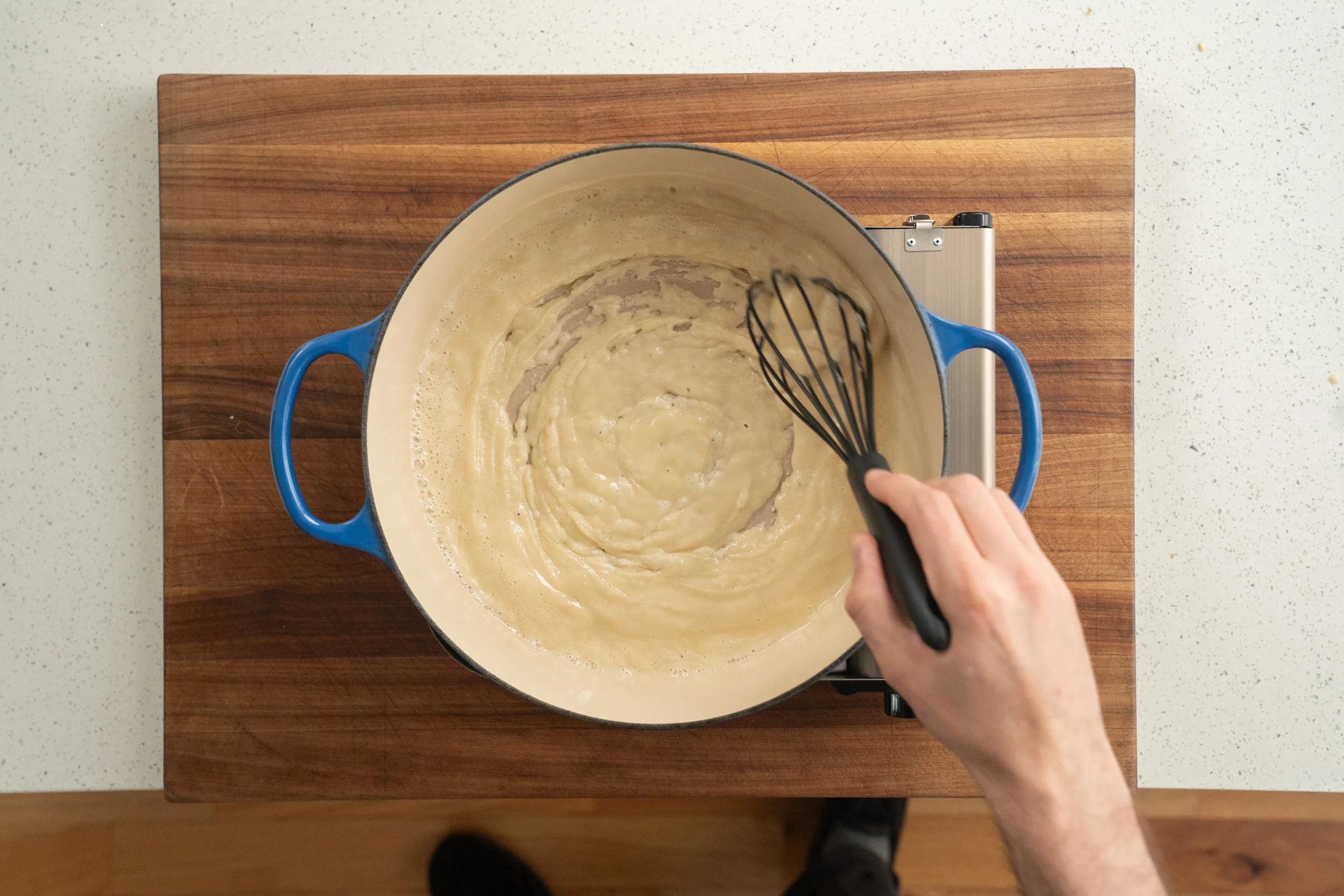
Stir constantly at first. As the roux starts to take on color, drop the heat to medium-low and stir every 30 seconds or so. You’re looking for a deep chocolate brown. Darker than milk chocolate, lighter than dark chocolate. A good gut check: take it to where you’re a little scared of it. That’s usually right where you want to be.
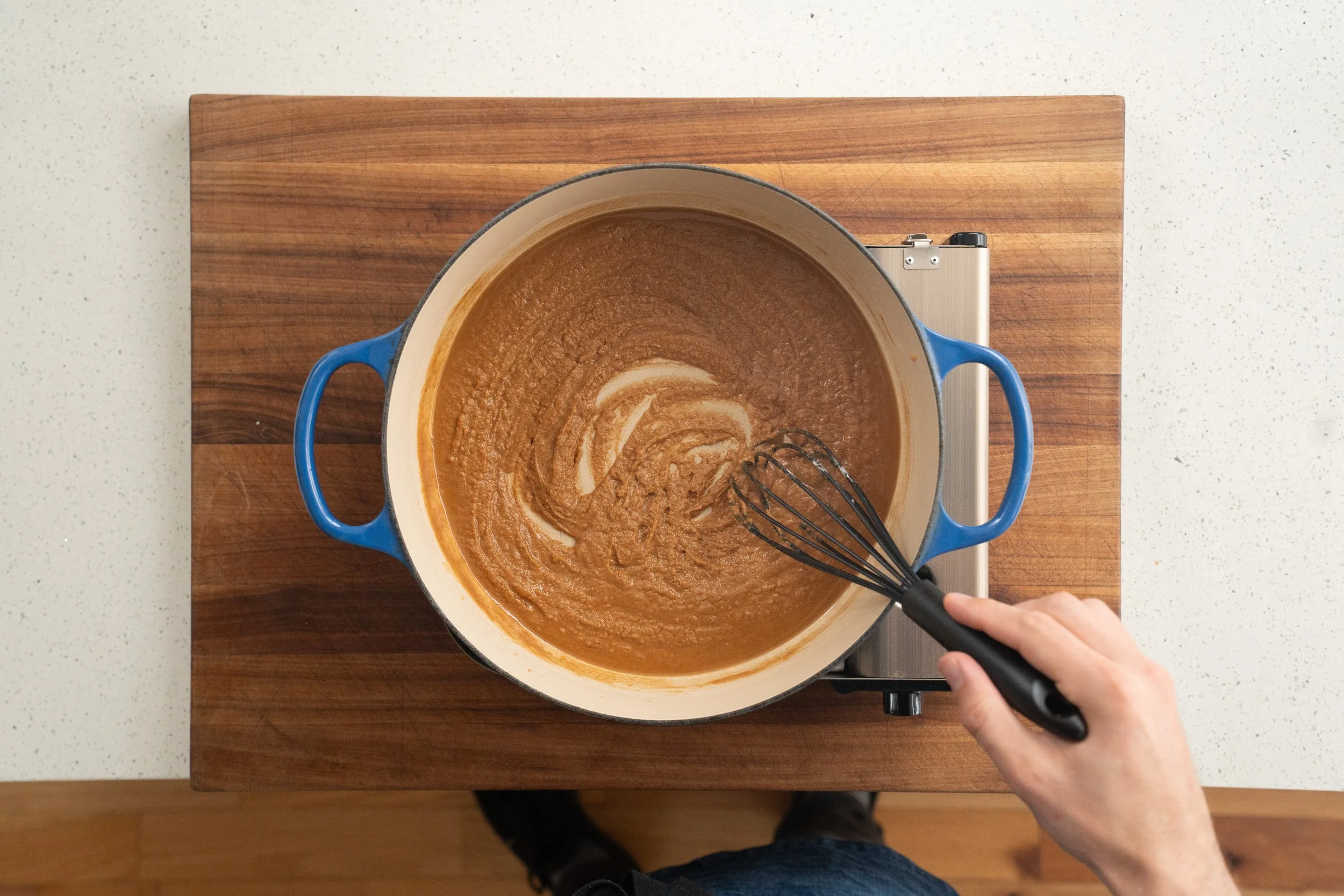
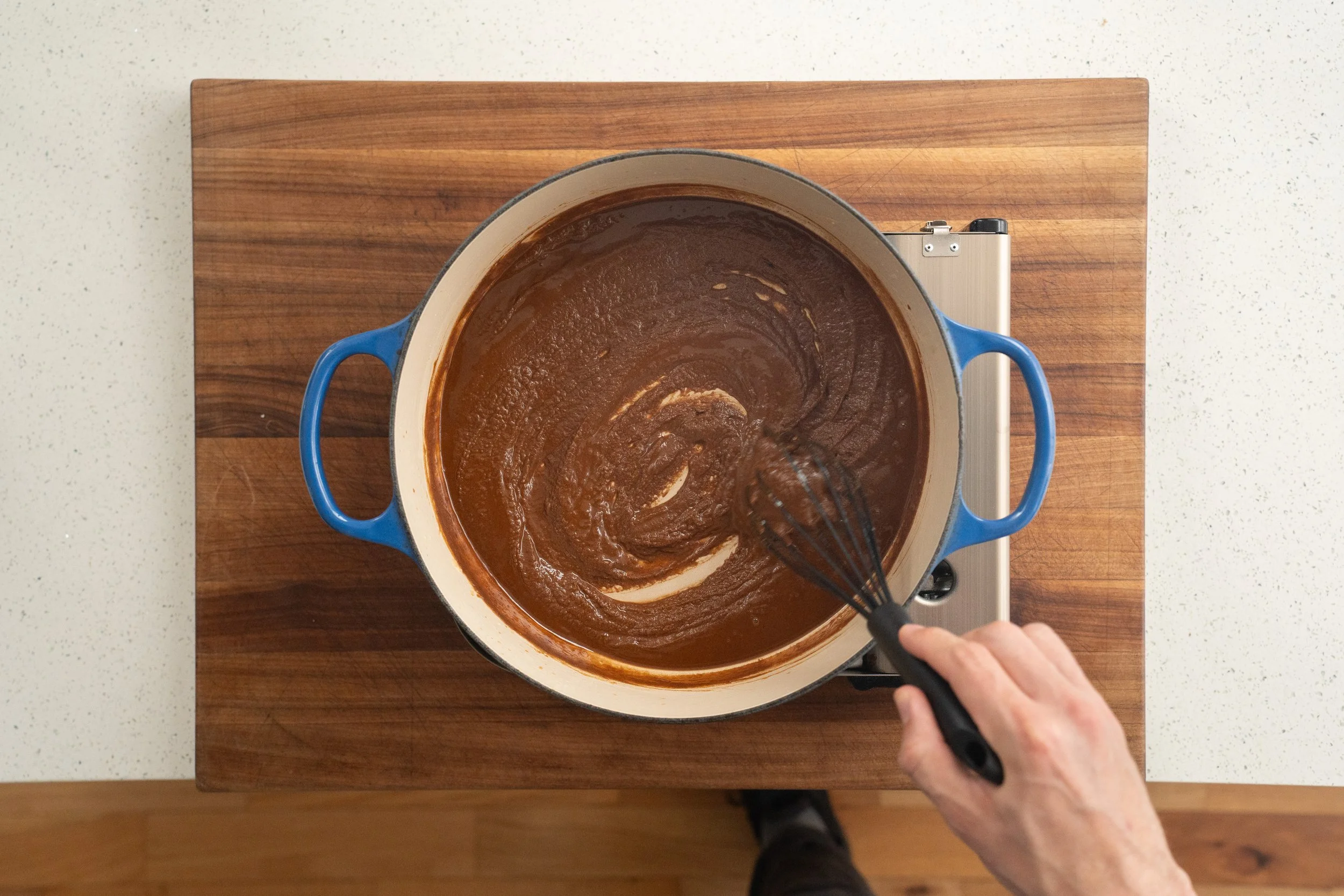
Roux is the soul of the gumbo. A deeply browned roux is what gives the whole pot its signature color and that nutty, roasty, almost smoky flavor. Without it, this isn’t gumbo, it’s just spicy chicken soup.
More Roux Tips:
If it smells burnt, tastes bitter, or you see black specks from scorched flour on the bottom, start over. A slightly-too-dark roux is fine,lots of Louisiana cooks go even further. But a burnt one is unsalvageable.
You can speed run this roux in about 15 minutes if you stir constantly. Cook it over medium high heat and pay attention, DO NOT WALK AWAY. Once it reaches a milk chocolate color, turn the heat way down and baby it for the last 3 to 4 minutes so it doesn’t burn.
6. Toast the Vegetables in the Roux. When the roux hits that deep chocolate color, add in the onions, celery, and poblanos. Stir to combine and fry in the roux for about 5-6 minutes. When the roux starts to lightly stick to the bottom of the pot, add in the garlic and stir for about a minute. This is your signal that it’s time to start adding liquid.
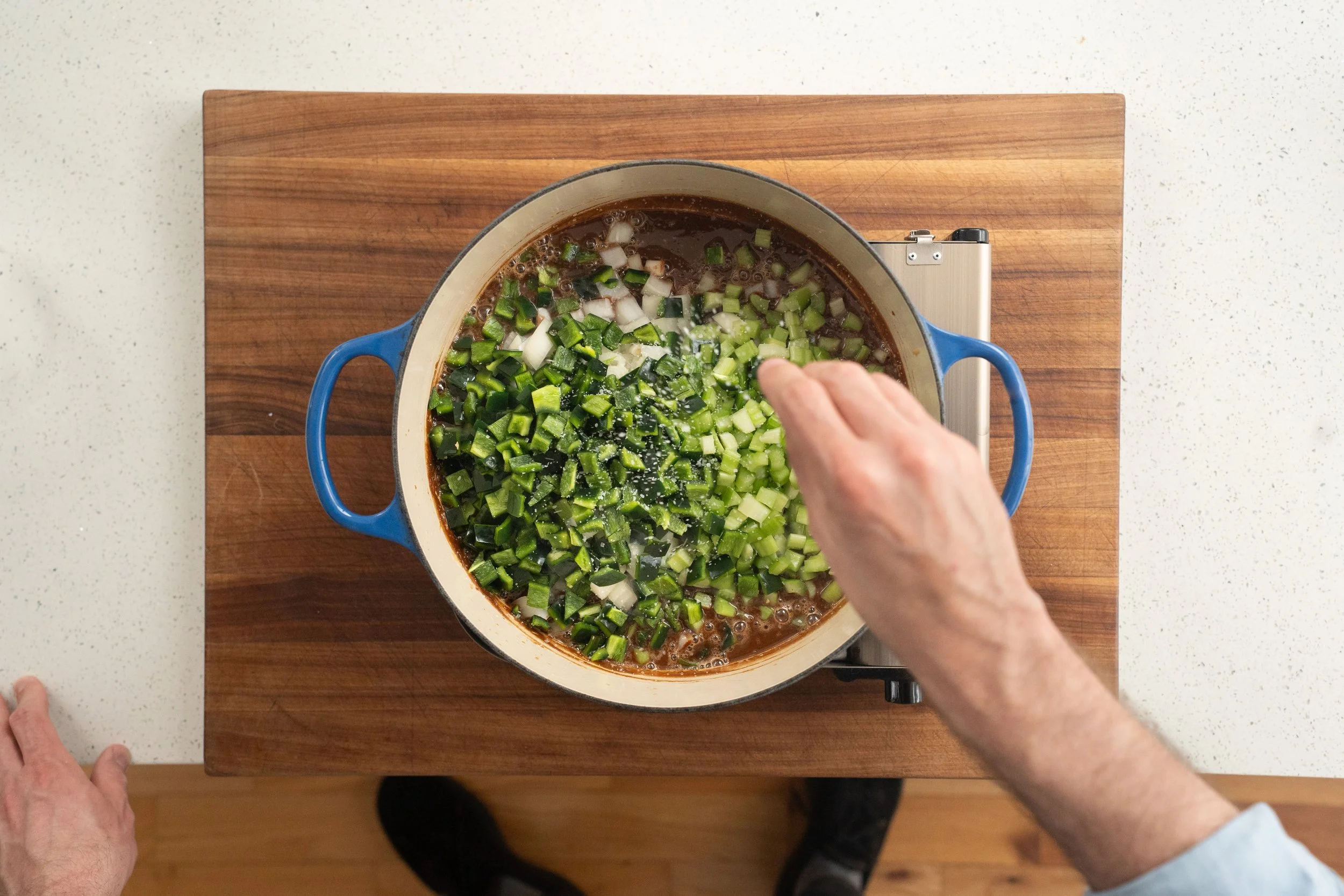
Adding the “trinity” into the roux
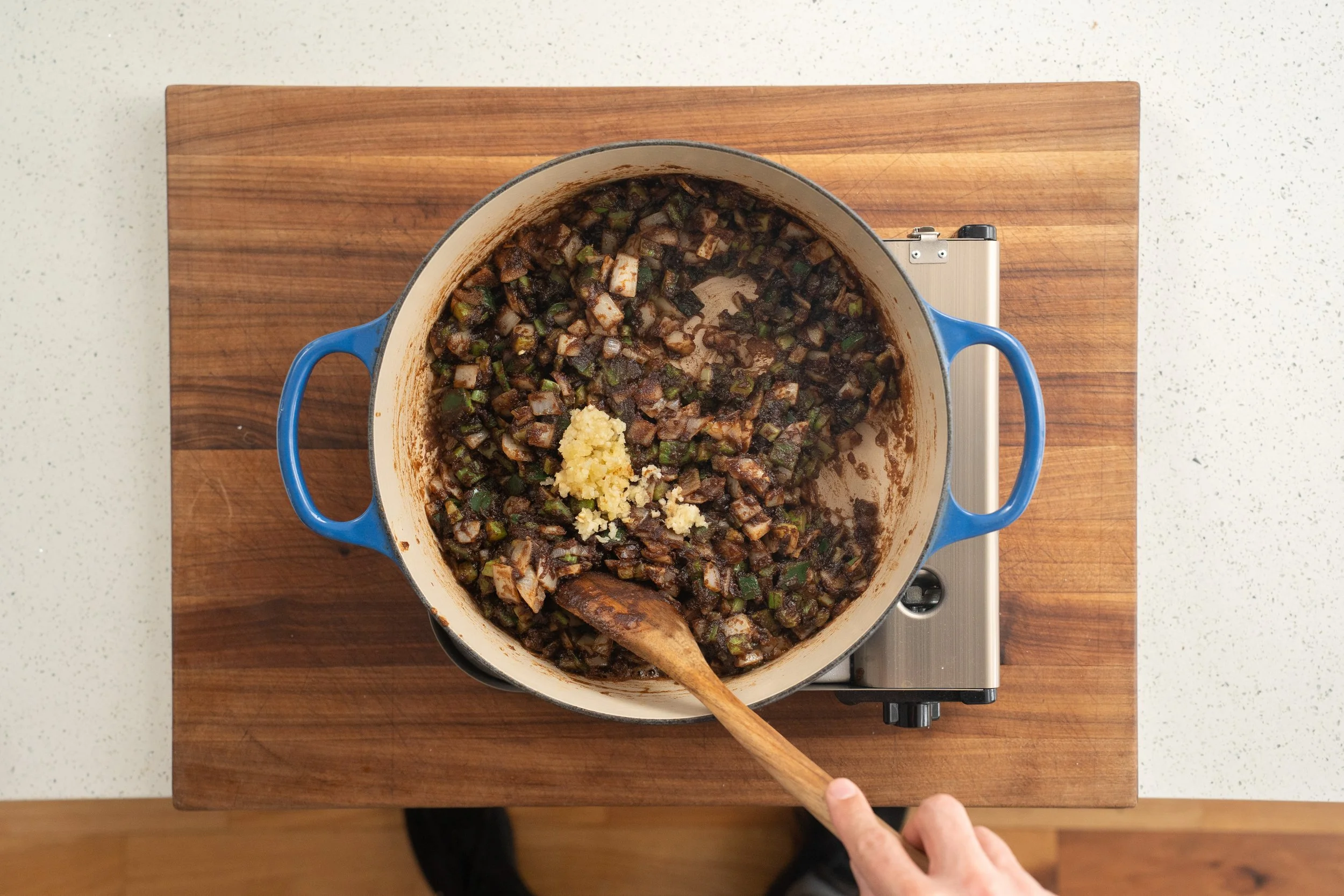
Adding garlic into roux
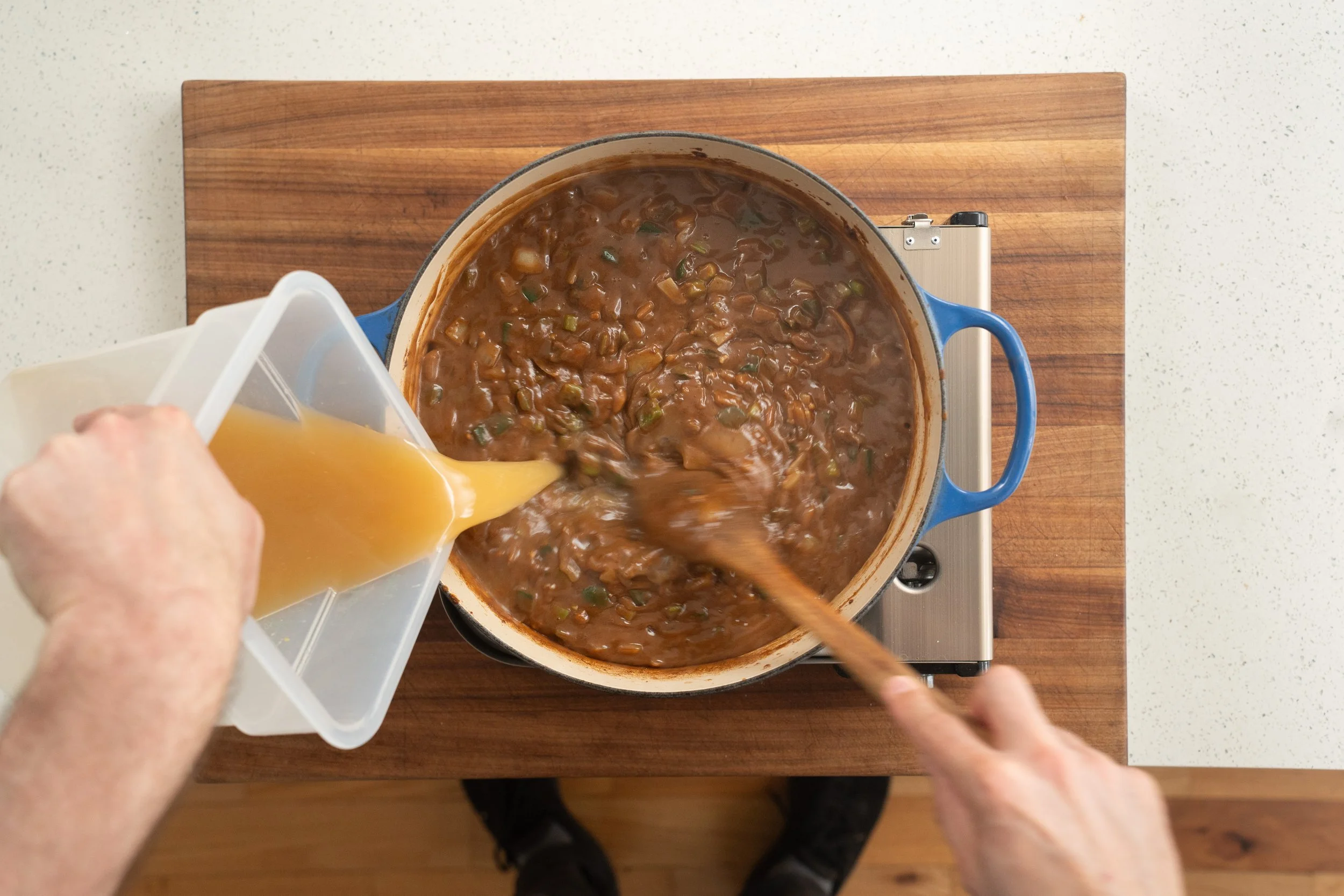
7. Build the Fortified Stock and Add It Gradually. While the vegetables are toasting, whisk together your stock mixture in a separate bowl or large measuring cup: 1500g of chicken stock, 35g of Better Than Bouillon chicken base, and 3 packets of unflavored gelatin. Whisk until everything is fully dissolved.
8.Now add the stock to the pot about 2 cups at a time. Whisk constantly and let the flour hydrate and come back to a bubble before adding more. Keep going until all the stock is incorporated. This gradual approach prevents clumping and brings the whole pot up to temperature much faster than dumping it all in at once.
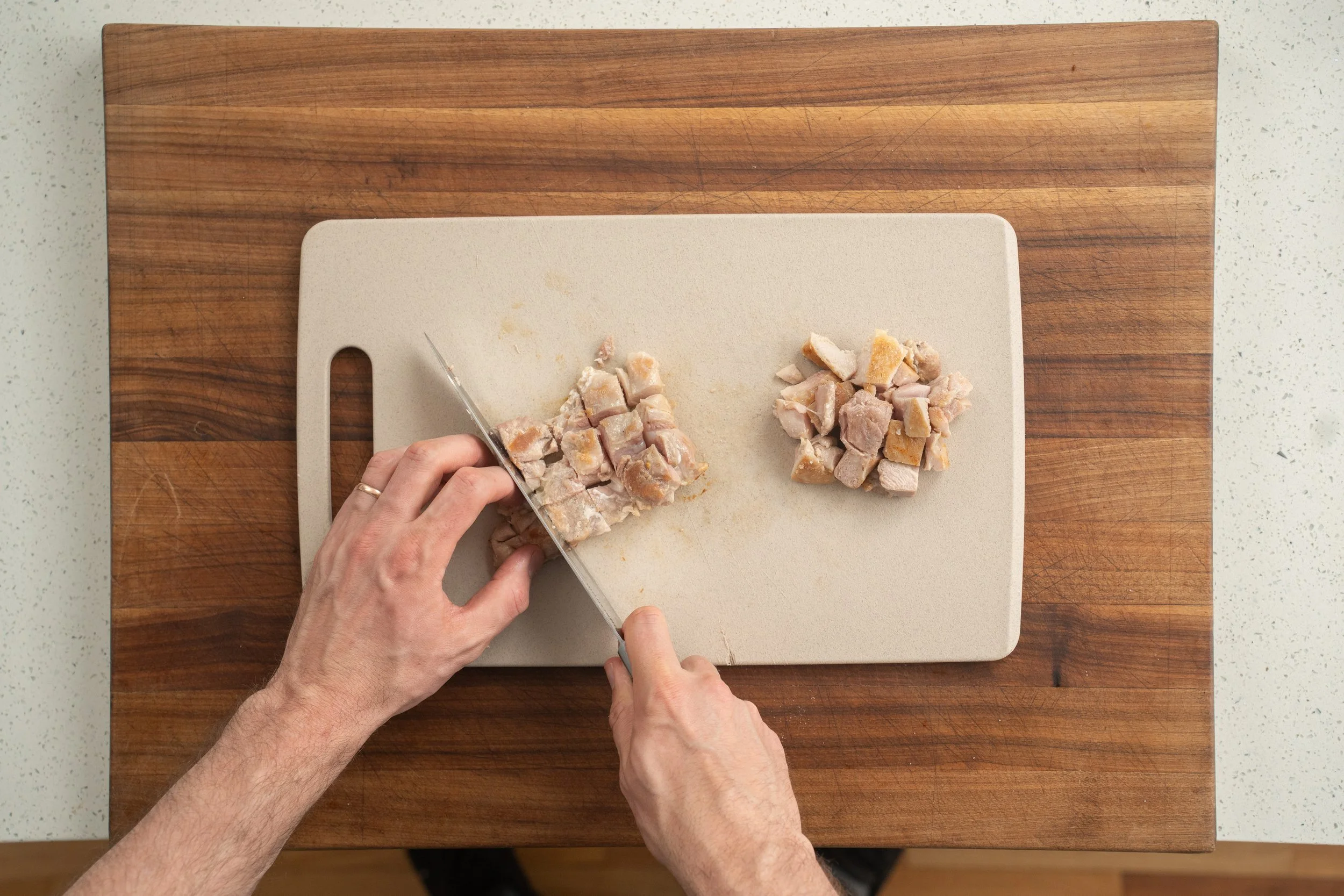
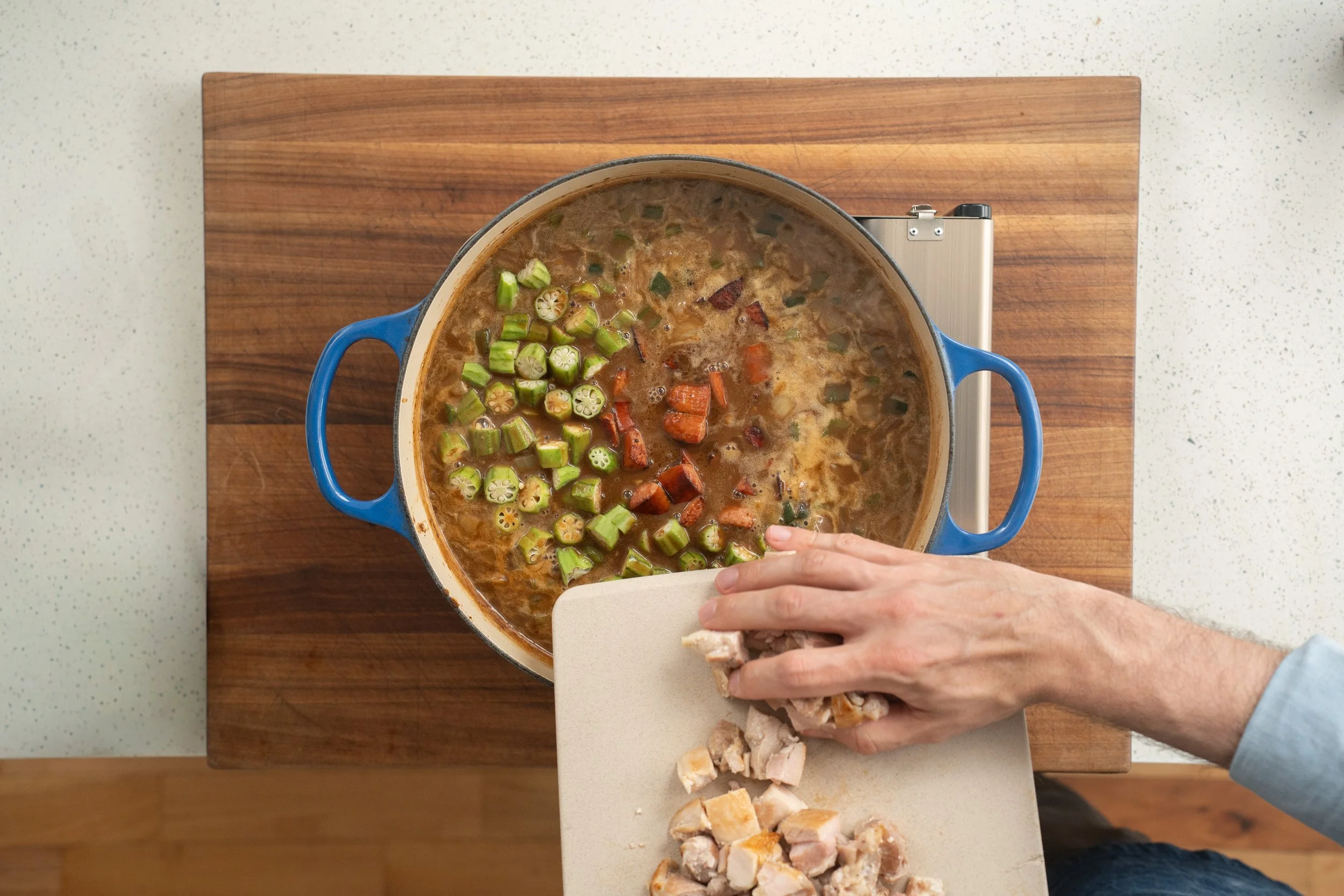
9: Add the Meat and Simmer. Dice the seared chicken thighs into 1” cubes, then add in with the seared andouille, any resting juices from the meats, and okra. Bring back to a gentle simmer and cook for about 25 minutes. Stirring every 5 minutes or so.
After 15 minutes, come back and skim off the okra scum and any roux oil that might be hanging out around the perimeter of the pot.
Continue to cook until the chicken is just starting to be shreddable, and the trinity veg/okra are tender but not mushy.
10. Season the Gumbo. Once the chicken is tender and the gumbo is thickened, add the cayenne, paprika, black pepper, and Louisana hot sauce. Give it a taste and adjust the salt.
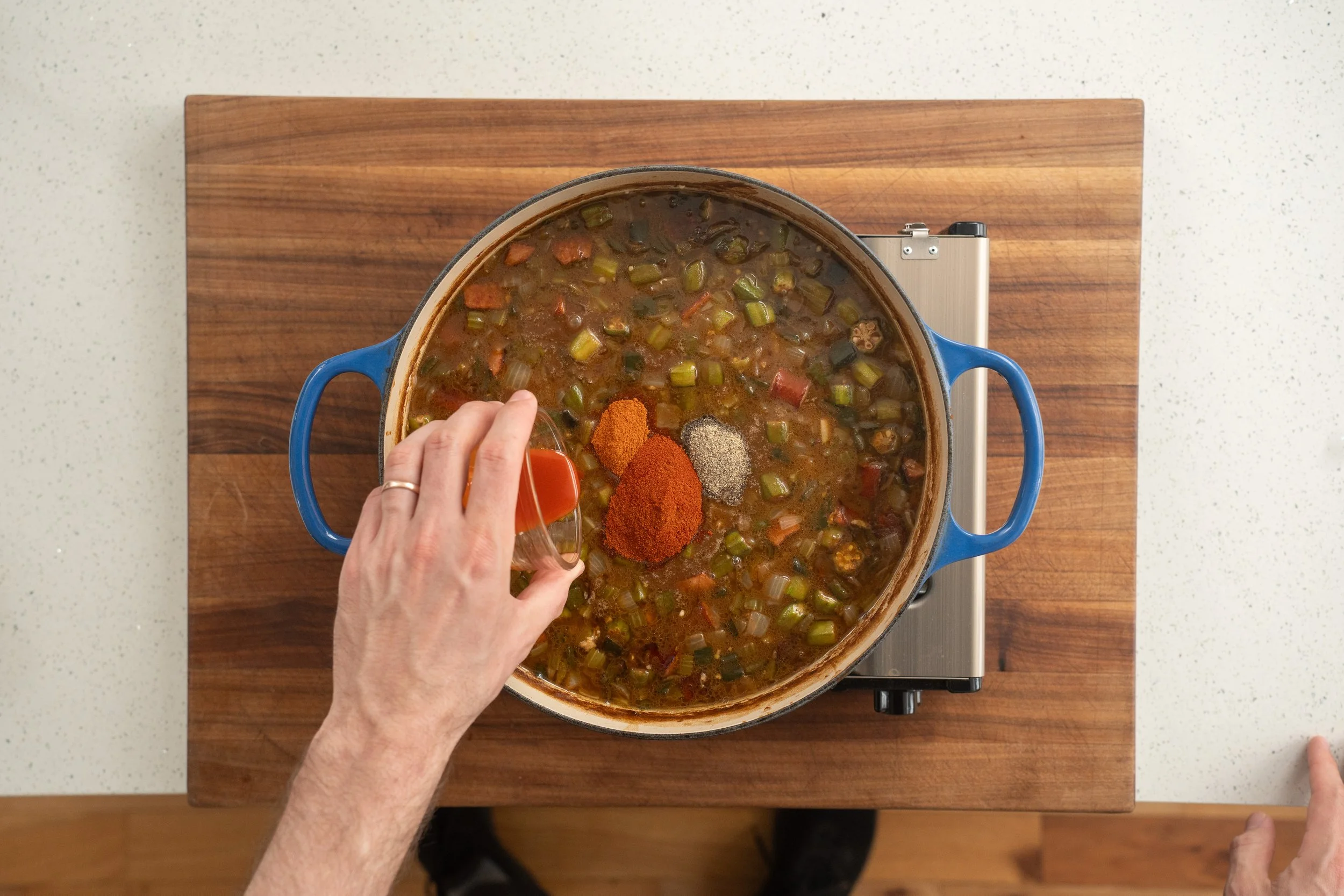
What about filé powder? With the roux and okra both in play, you’ve already got plenty of thickening power. If for some reason the gumbo still seems thin, you can stir in a little filé powder—but do it off the heat. If you add it while it’s simmering, it can get stringy. Also, I assumed you don’t have filé, and getting it is not that easy, so I left it out.
11. Serve with Rice. Ladle the gumbo into bowls. Take an ice cream scoop, pack it with cooked white rice, and drop that scoop right into the center of the bowl. Garnish with sliced scallions. That’s it. That’s the move.
For the rice, I use a simple ratio: 300g long grain American white rice, 400g water, and 5g salt. Cook it however you normally cook rice—rice cooker, stovetop, whatever works for you.
Storage and Make-Ahead
Gumbo keeps well in the fridge for 5-6 days and actually tastes MUCH MUCH better the next day as the flavors continue to meld. It’s actually kind of crazy how good it is on day 2 or even after just a 60 min rest on the stovetop day-of.
To reheat, warm it gently on the stovetop over medium-low heat, adding a splash of stock or water if it’s thickened up too much overnight. You can also freeze gumbo in airtight containers for up to 3 months. Thaw overnight in the fridge before reheating.
My Go-To Gumbo Gear
Below are the tools I actually use when making this recipe. Some of these are affiliate links, which means I may earn a small commission if you purchase through them—at no extra cost to you.

You’re stirring this roux for 45 minutes. Get something comfortable to stir with that won’t melt.

For searing the andouille and chicken without all the sticking and scrubbing. Makes clean up a lot easier, too.
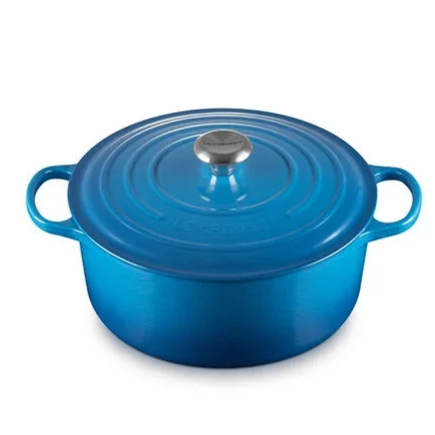
Essential for even heat distribution during the long roux process. A 6-7+ quart is ideal for this batch size.
Frequently Asked Questions
Can I use butter instead of oil for the roux?
HARD NO. We’re cooking this roux at a high temp for a LONG time, and and the milk solids in butter will burn well before you reach the color you need. Stick with a neutral oil like peanut.
Is there a more hands-off way to make the roux?
Yes. You can make an oven roux by combining the oil and flour in an oven-safe pan and baking it at 400°F, stirring every 15 minutes until it reaches the right color. It takes 2–3 times longer than the stovetop method, so plan ahead. I’d recommend doing it the day before. You can also use a store-bought gumbo base like Tony Chachere’s, which can be a roughly 1:1 substitute for the roux and will save you about 45 minutes. In my opinion nothing is a substitute for real homemade roux though.
Can I make this gluten-free?
You can, but keep a close eye on it. Gluten-free flour browns differently than regular AP flour, and the thickening power can vary. Be prepared to adjust at the end—a tiny bit of filé powder or a small cornstarch slurry can help if the consistency is off.
What if I don’t like okra?
Totally fine to skip it. But gumbo relies on at least two thickening agents (roux, okra, or filé powder) for proper body. If you leave out the okra, make sure you add filé powder at the end—off the heat—so the gumbo still thickens up the way it should.
Why don’t you use a pre-made Cajun seasoning?
Most commercial Cajun blends are either too spicy, not spicy enough, or way too salty. None of them have anything special I don’t already have on my shelf. By using cayenne, paprika, and black pepper separately, you get complete control over your heat level. And chances are, you already own all three.