
White Wine Mussels
Plump, briny mussels steamed open in a buttery white wine broth, then served with crusty bread for dipping. This is by far the easiest and cheapest way to have a “luxury” seafood experience at home.
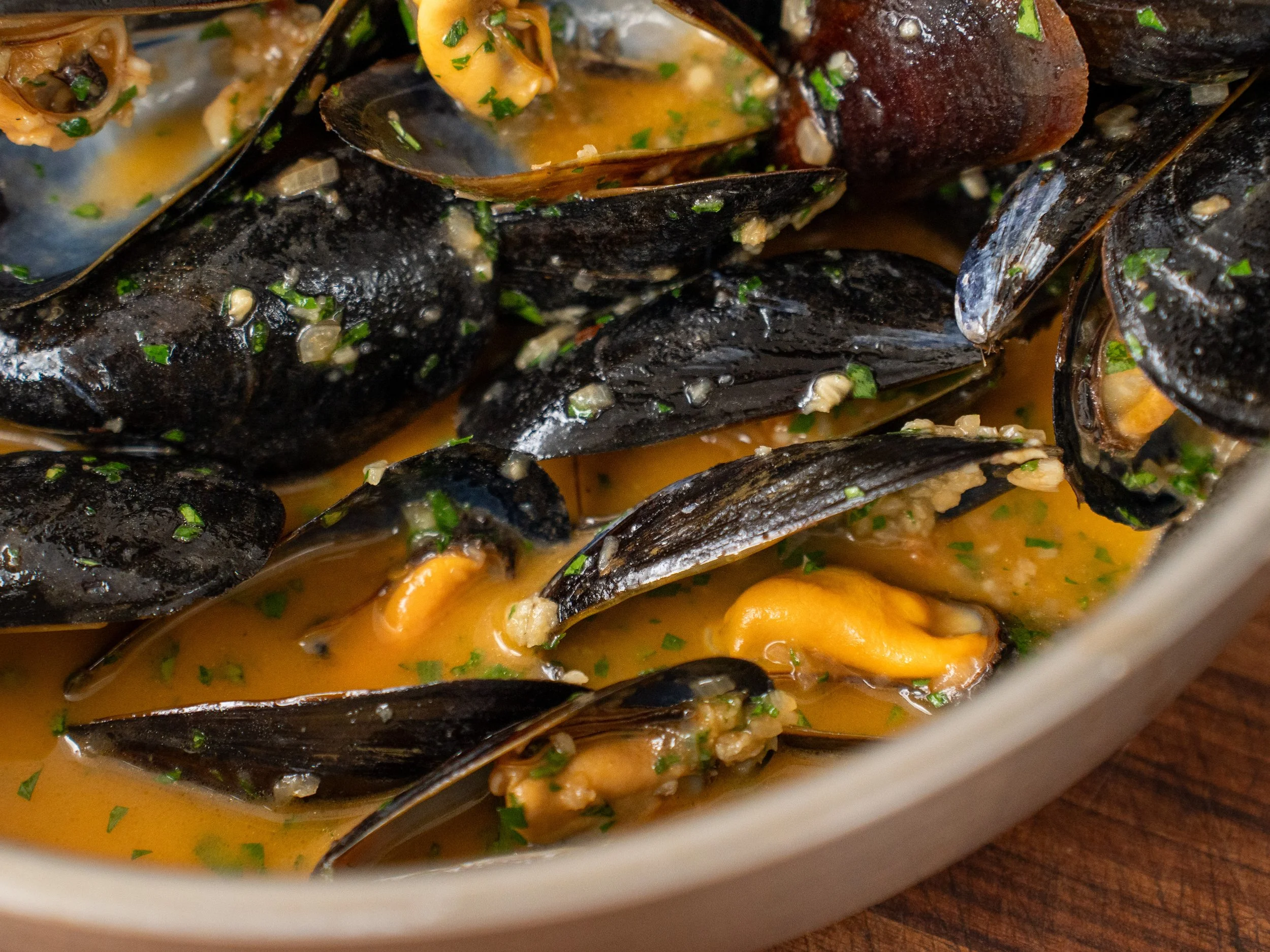
Why This White Wine Mussels Recipe Delivers
In my experience, mussels are either wonderful or…gross. There isn’t much in the middle. This recipe aims for the good side by purging the mussels in cold brine to push out any lingering grit, then taking a low-intervention approach to keep the flavors light, lively, and fresh.
From there, it’s mostly a matter of supporting the mussels with flavors that bring out their natural sweet brininess. I use a generous amount of shallot and garlic for the base, a little tomato paste for savory depth and body, and just enough butter at the end to make the broth silky so it clings to the mussels more like a sauce.
Overall, there’s no real trick to getting mussels right, aside from starting with a fresh product. It’s an insanely simple dish, and the success mostly comes down to restraint, good timing, and paying attention.
Brian's Pro Tips
Brine / Purge- In this recipe, I’m using a restaurant technique where the mussels soak in a very cold brine that’s about 3–4% salt. This roughly mimics the seawater they grow in. Since mussels are filter feeders, they can pass that clean brine through their bodies and, hopefully, push out any lingering grit along with it, which can easily ruin a bite. The time in the brine also helps keep the mussels plump and properly seasoned. As mussels sit in transit, they can lose some of their natural liquor and salinity, so this quick soak helps them regain their natural sweet briny flavor.
Steam Quickly - In the context of this dish, high heat doesn’t really hurt the final texture of the mussels, so instead of cooking them gently like I would with most shellfish, I steam them covered in boiling liquid. This is helpful because it cooks the mussels quickly and evenly. A boil also gives us a temperature ceiling, around 212°F/100°C, which helps regulate the cooking environment. That gives everyone using the recipe the same basic conditions, so the cook time can be much more prescriptive.
Don't Overcook the Wine - My instinct usually tells me to reduce wine hard to cook off the alcohol and concentrate its sweetness. But this dish is all about fresh simple flavors and it makes a huge difference when you don't cook off the aromatic qualities in the wine. They pair perfectly with the clean sweet brine in the mussels.
Key Ingredient Notes & Substitutions
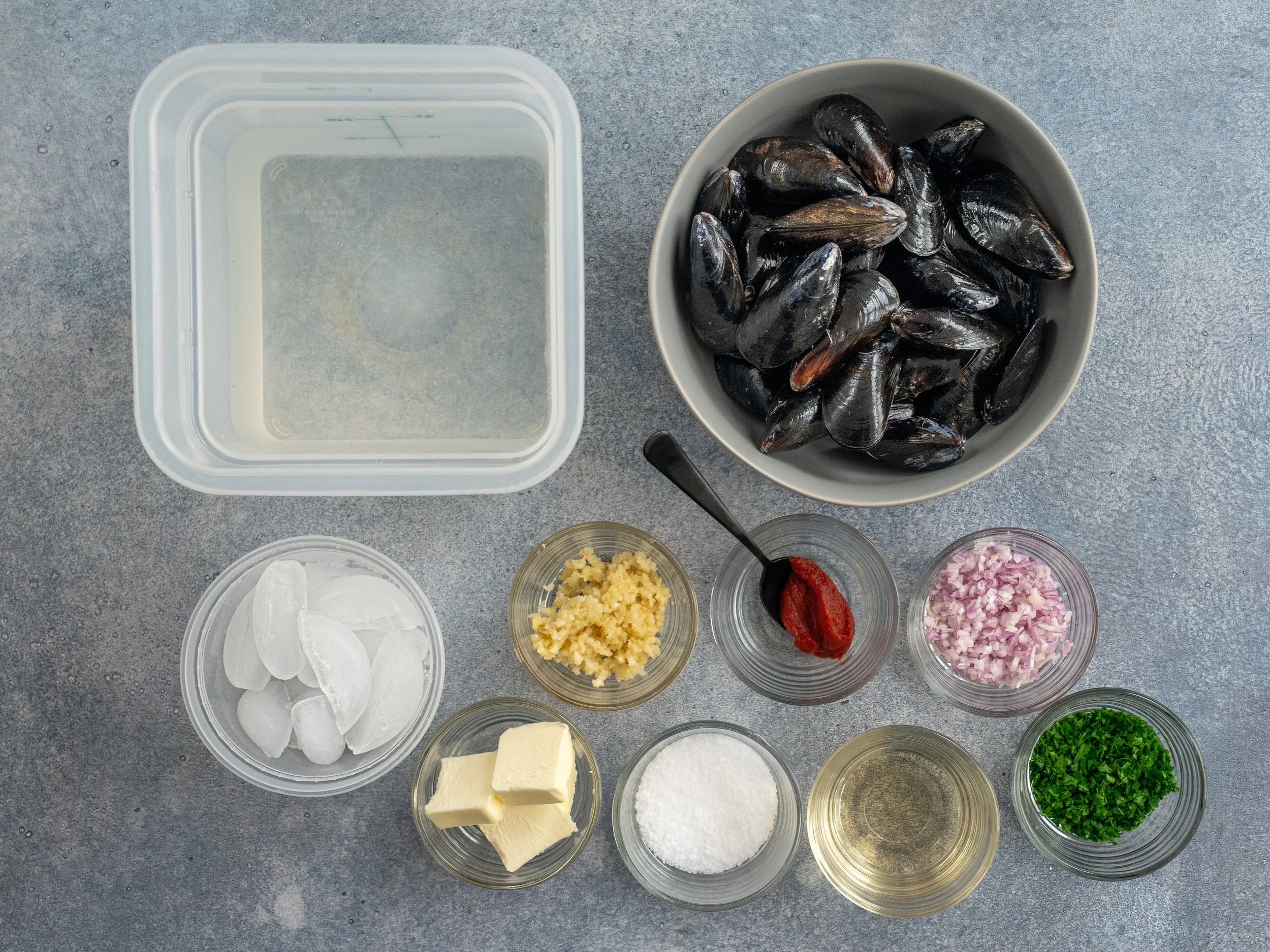
These are the important ingredients worth calling out in this recipe. A full ingredient list with amounts is listed in the recipe below.
Mussels - The entire recipe hinges on getting high quality mussels. The best place to start looking is a local seafood monger. These places build their business on quality and usually sell enough volume to ensure freshness. My second choice is Whole Foods. For most people this will be the only semi reputable seafood counter in their town. And third option is standard issue grocery chains. I cant recommend this though because there’s no way to ensure they know what they’re doing with shellfish AND that they will sell a large enough volume of mussels to ensure turnover.
Figuring out whether mussels are alive when you’re standing at the seafood counter isn’t always easy or practical, so the best move is to smell them if you can. They should smell clean and briny. Think ocean breeze, not fishing boat dock. If they smell fishy or sour, I’d be worried.
Dry White Wine - Reach for something dry and crisp that you’d actually want to drink on a hot day on a patio. Sauvignon Blanc, Pinot Grigio, or an unoaked Chardonnay all work well. Stay away from anything oaky or sweet, because those flavors can get weird and heavy once they concentrate. If you don't drink alcohol, use the same amount of chicken or seafood stock with a squeeze of lemon. You’ll lose a little depth, but the dish still works.
Tomato Paste - Only 15 grams of tomato paste goes in, but it makes a big difference. It gives the broth a little savory backbone, warms up the color, and nudges the whole dish slightly toward bouillabaisse. It also helps the butter emulsify at the end, so the broth stays silky instead of thin and watery.
Buy tomato paste in a tube if you can, so you’re not opening a whole can for one spoonful.

Recipe
PREP TIME 15 min active + 30 min soak | COOK TIME 10–15 min | YIELD 1–2 portions
For the Mussel Soak:
1500g (about 6¼ cups) water
500g (about 3–4 cups) ice
60g (about ¼ cup) kosher salt
450g (about 1 lb) mussels
For the Broth:
3 tbsp olive oil
30g (about 1 large shallot) shallot, finely chopped
30g (about 6–7 cloves) garlic, minced
Pinch chili flake
Fresh cracked black pepper
15g (about 1 tbsp) tomato paste
100g (scant ½ cup) dry white wine
60g (about 4 tbsp) butter, cold, cut into pieces
10g (about ¼ cup) parsley, chopped
For Serving:
Crusty baguette (crisped in the oven and sliced)
How To Make White Wine Mussels
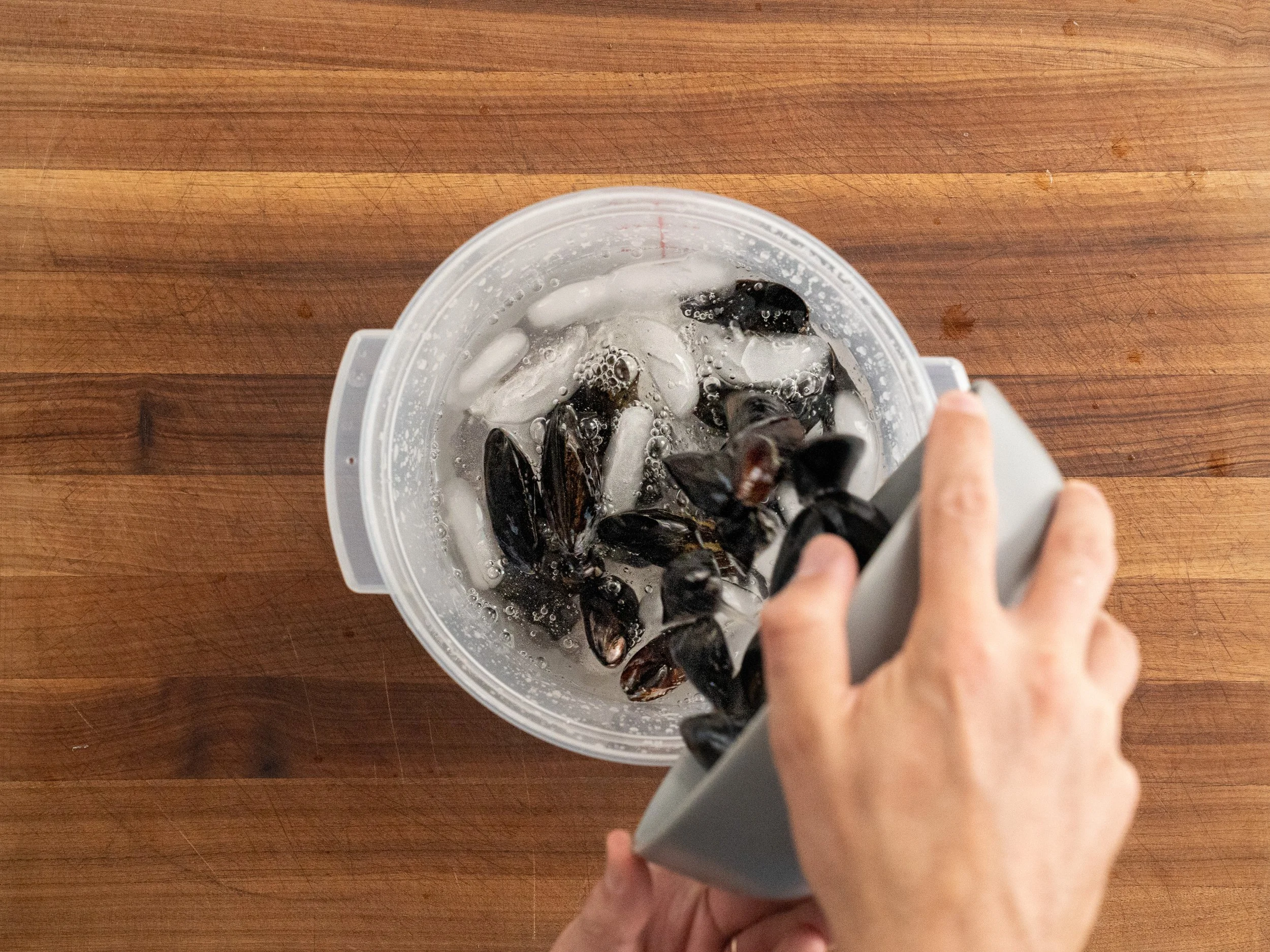
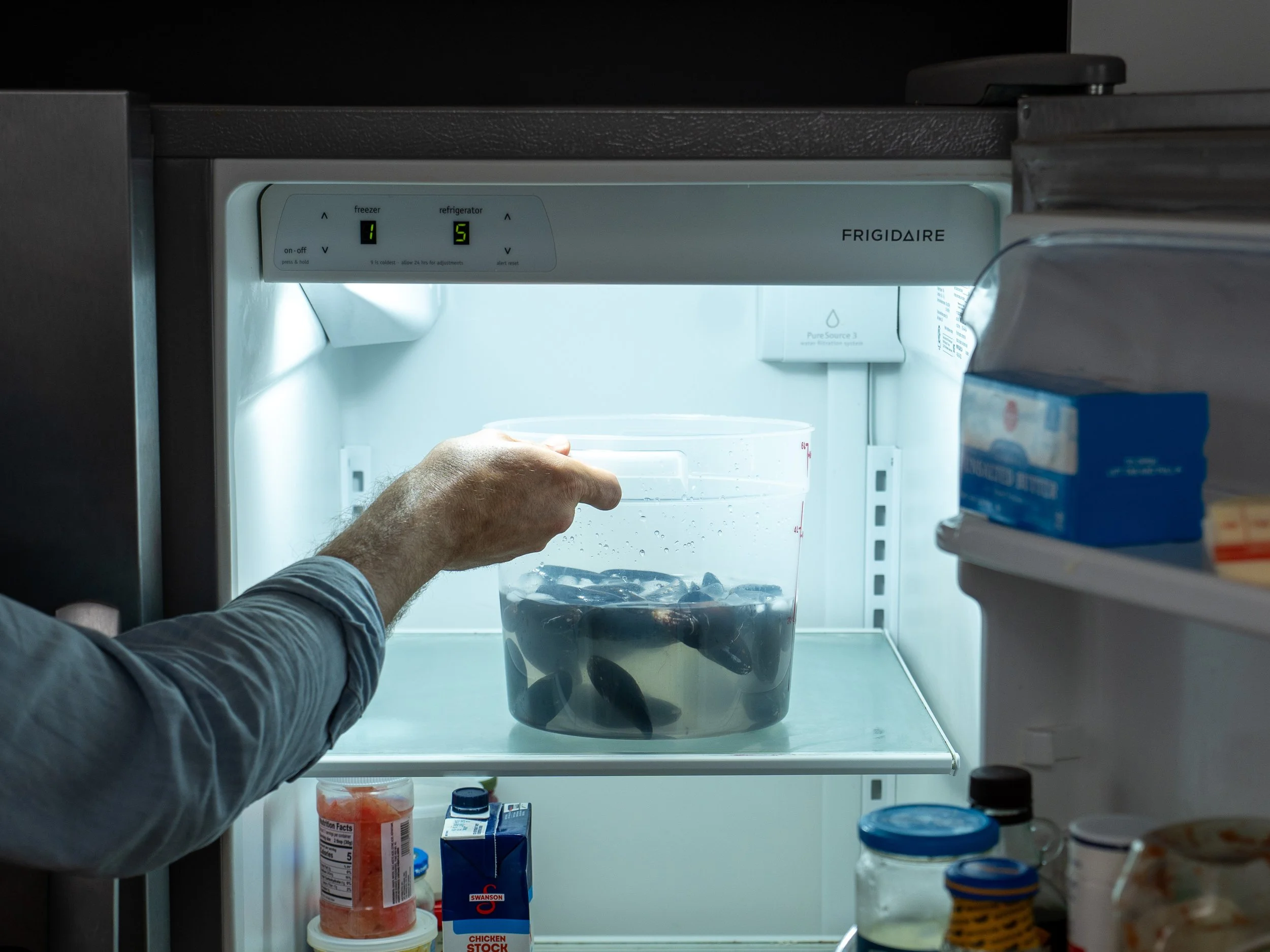
1. Purge/Brine the Mussels. Mix 1500g water, 500g ice, and 60g salt in a big bowl and stir until the salt dissolves. Then add in 450g mussels and let them soak for 30 minutes in the refrigerator.
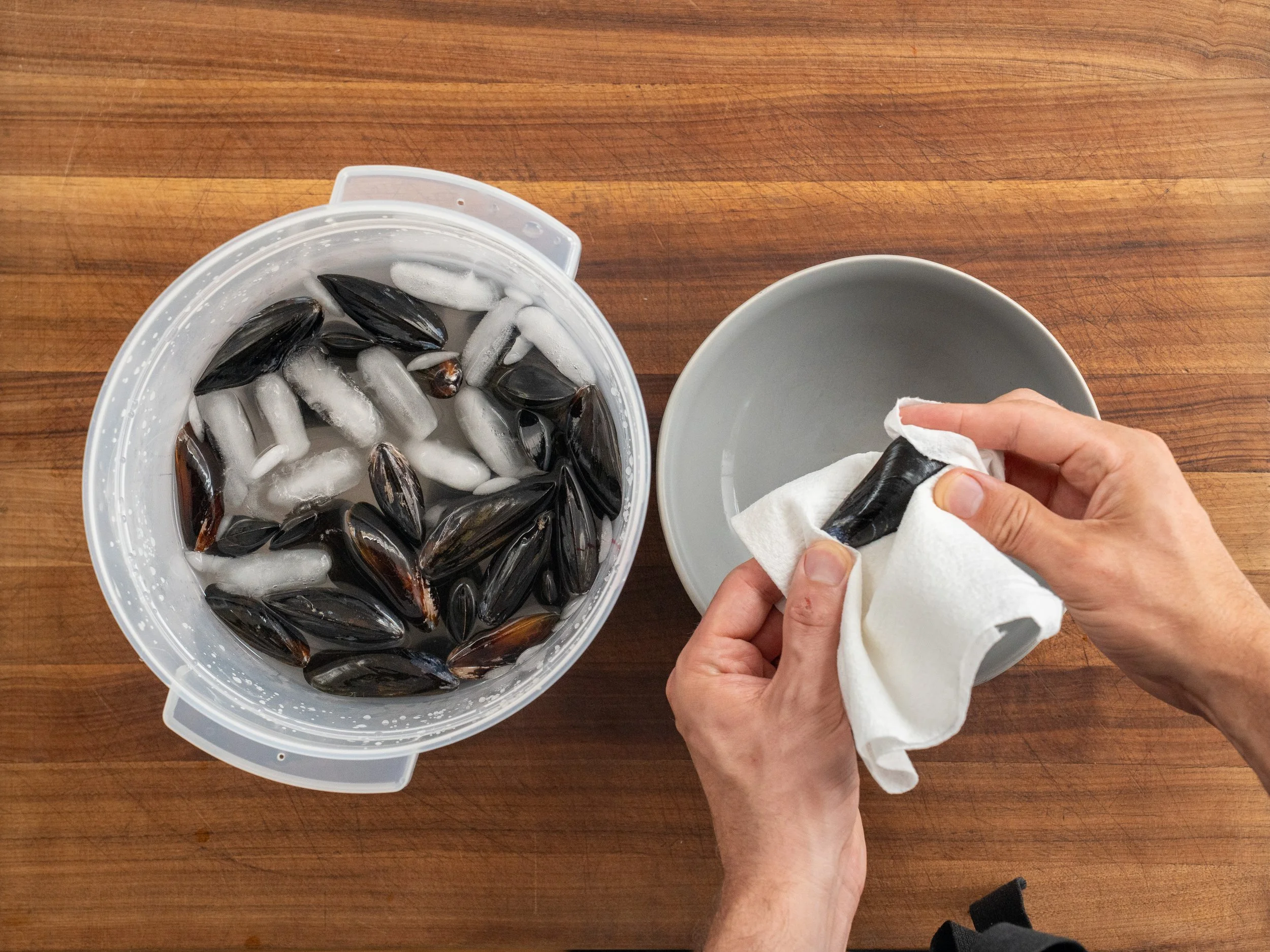
2. Clean and Debeard Mussels. After purging, scrub the shell with a paper towel or a steel wool, then yank off the beard by pinching it against the shell and pulling toward the hinge. Set the cleaned mussels in the fridge until you're ready to cook. Discard any dead or broken mussels as you clean.
How do I tell if a mussel is dead? If you see a shell that’s slightly open, tap it or squeeze it a bit. If the mussel is alive, it should close back up and stay closed. If it doesn’t, toss it! If there are any mussels with broken shells, those need to go too. Not worth the risk.
3. Prep the Aromatics and Bread. Finely chop 30g shallot and mince or press 30g garlic through a garlic press. Toss a baguette or chunk of bread into a 375°F / 190°C oven to refresh so it's hot and crispy when the mussels are done.
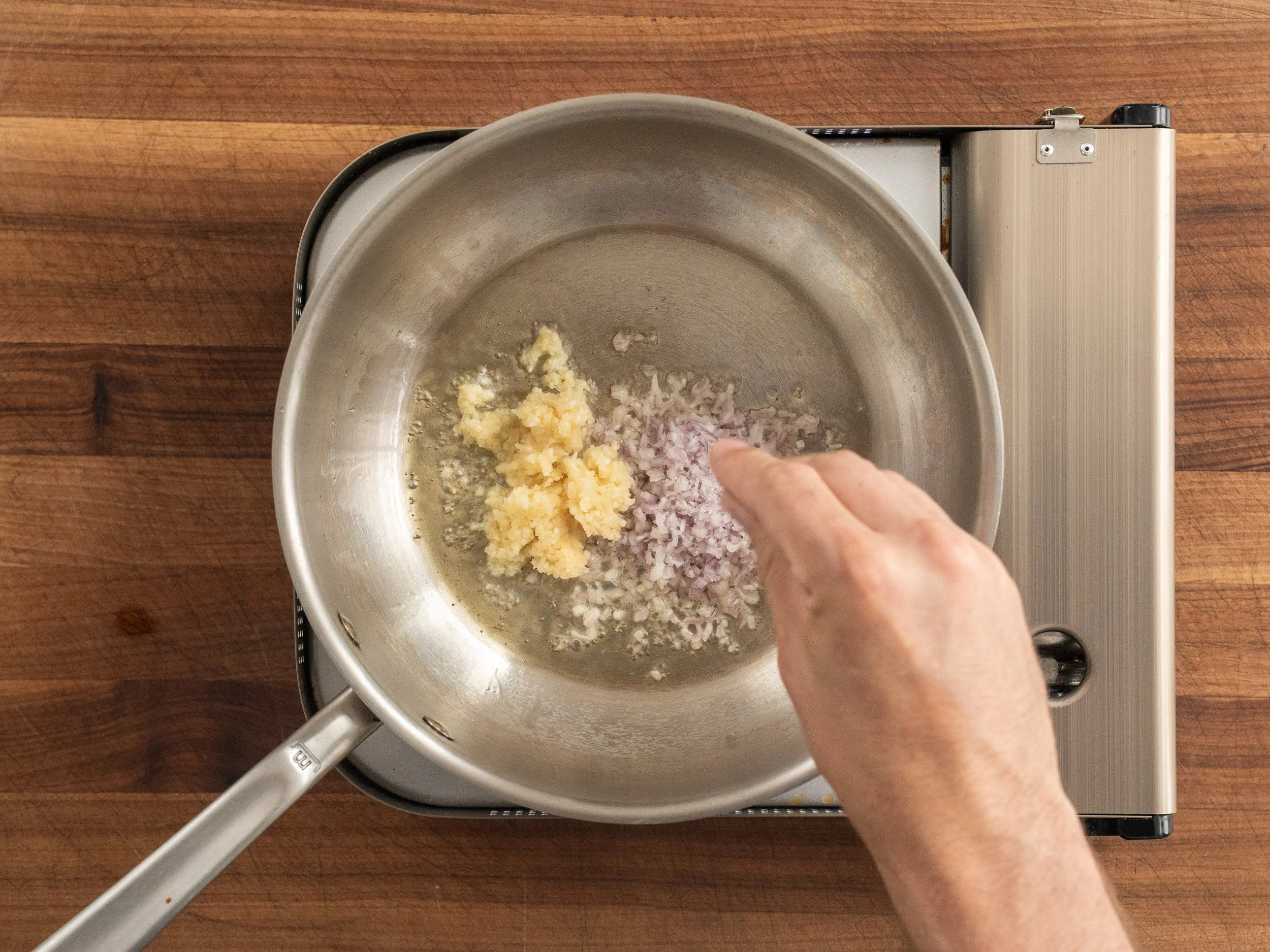
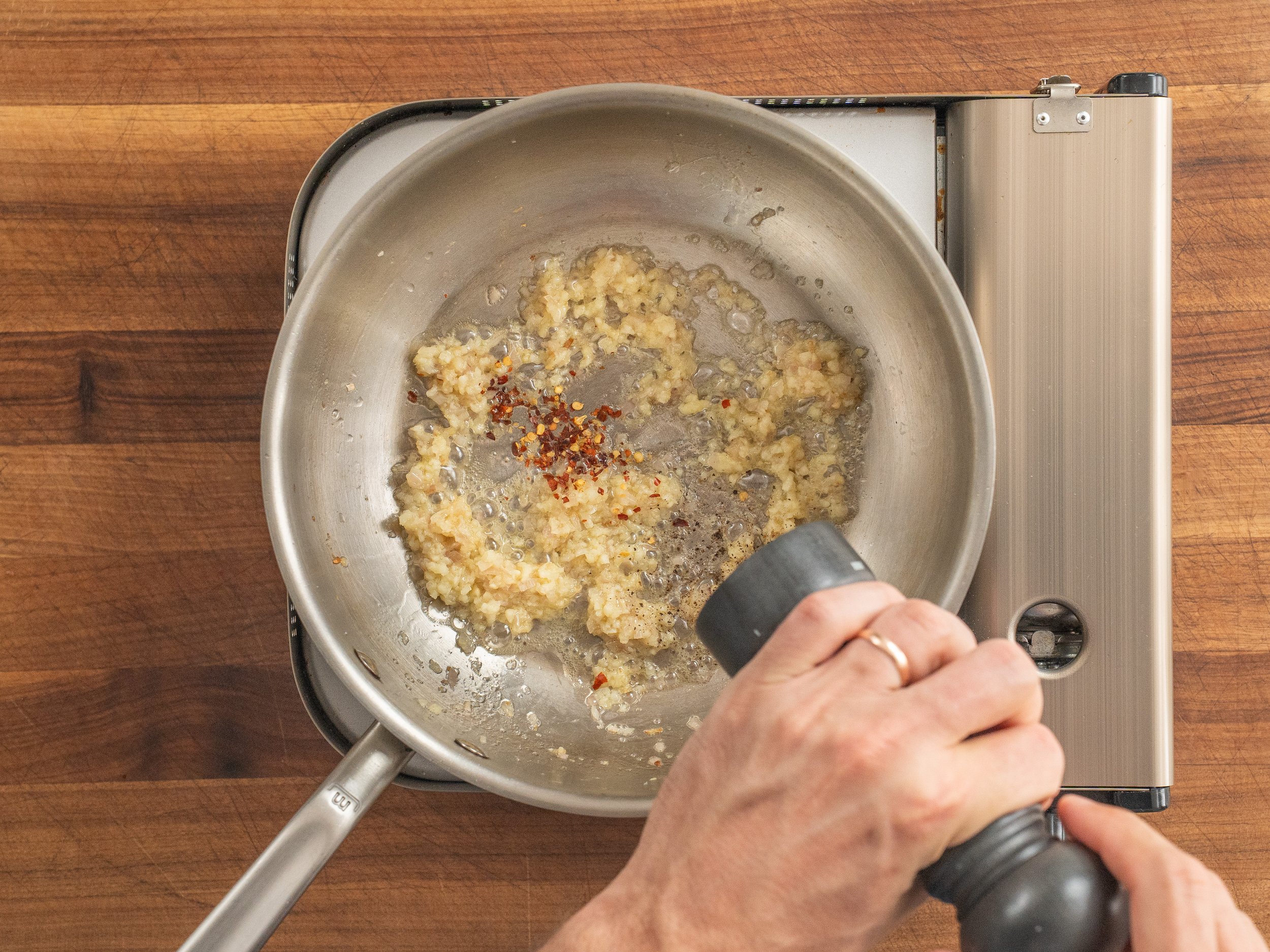
4. Sweat the Aromatics. In a saucier or dutch oven ( like a 3 qt saucier), combine 3 tablespoons oil and the shallot. Sweat over medium heat for 5 minutes until things are softened and translucent. You’re not looking to develop color. Once the shallot and garlic are soft and sweet, add in a pinch of chili flakes and a few cranks of black pepper and fry for 30 seconds to bloom.
What does "sweat" mean, and how do I know they're done? Sweating just means cooking them gently in the fat until they go soft, with no browning and no color. You're pulling the water out and mellowing the raw edge. They're ready when they look almost melted and translucent. If they start to take on color, your heat's too high. Turn it down.
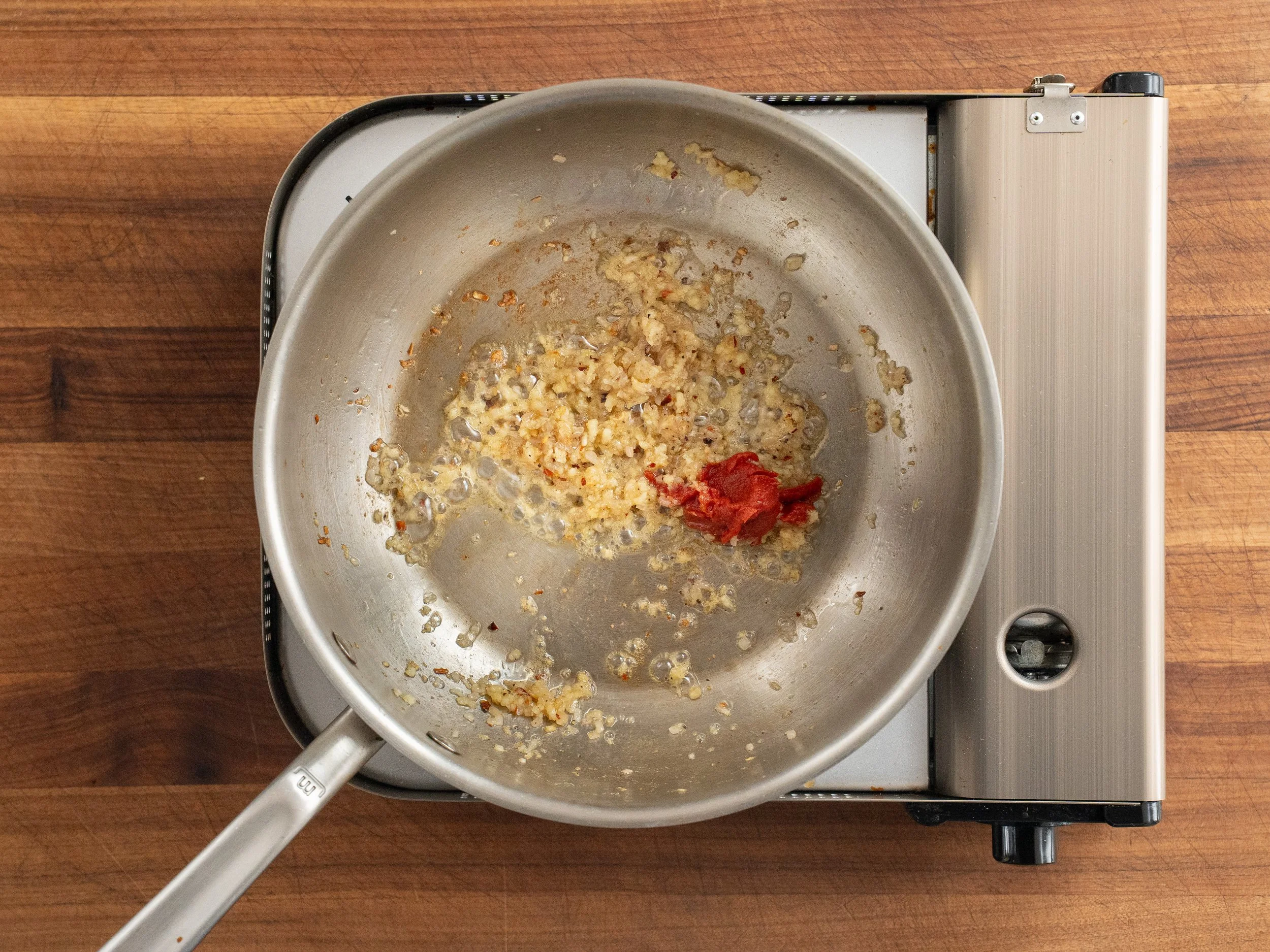
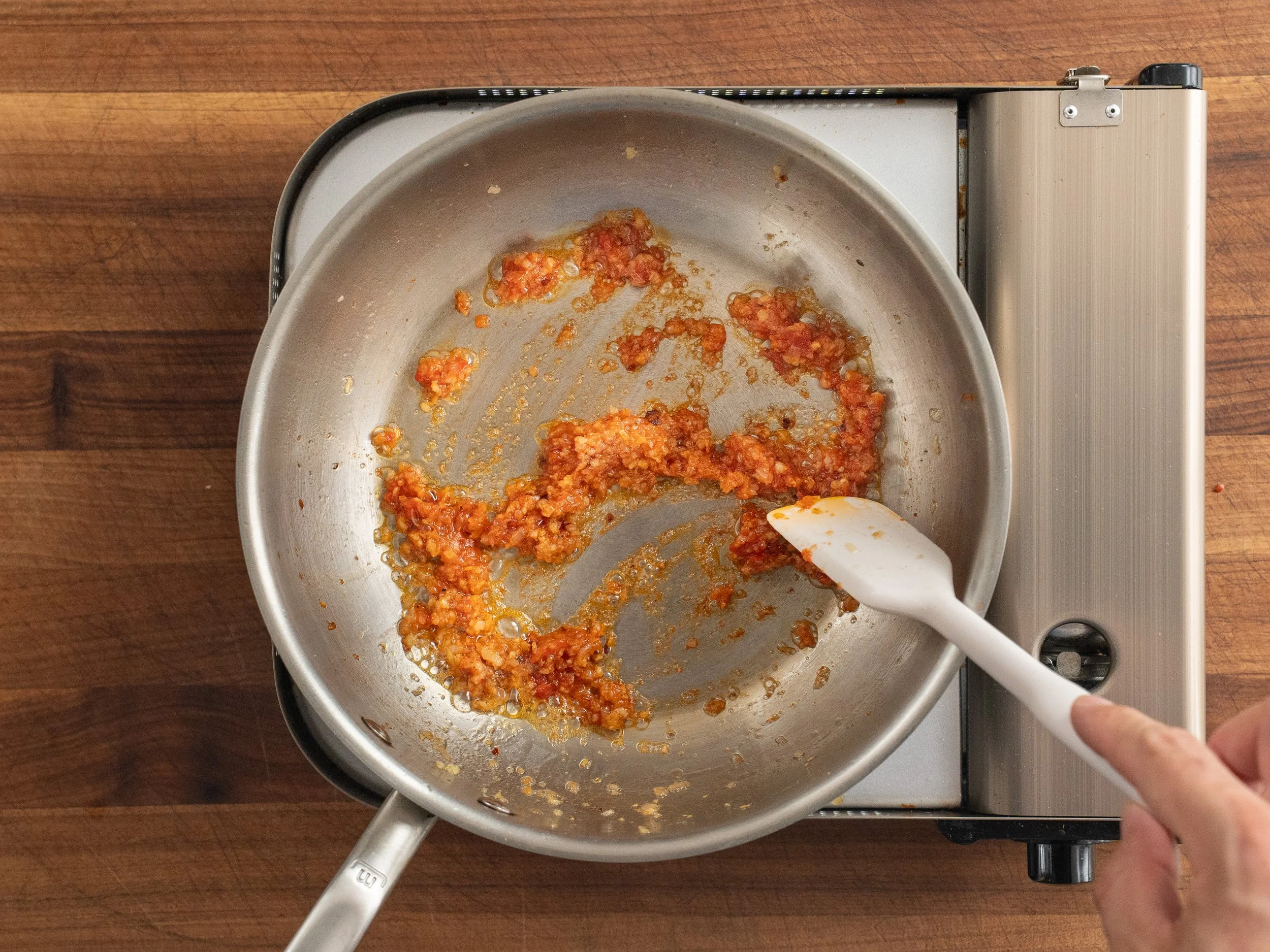
5. Bloom the Tomato Paste. Add 15g tomato paste to the pan and cook it for another 1-2 minutes, stirring so it darkens a shade and loses that raw, tinny edge.
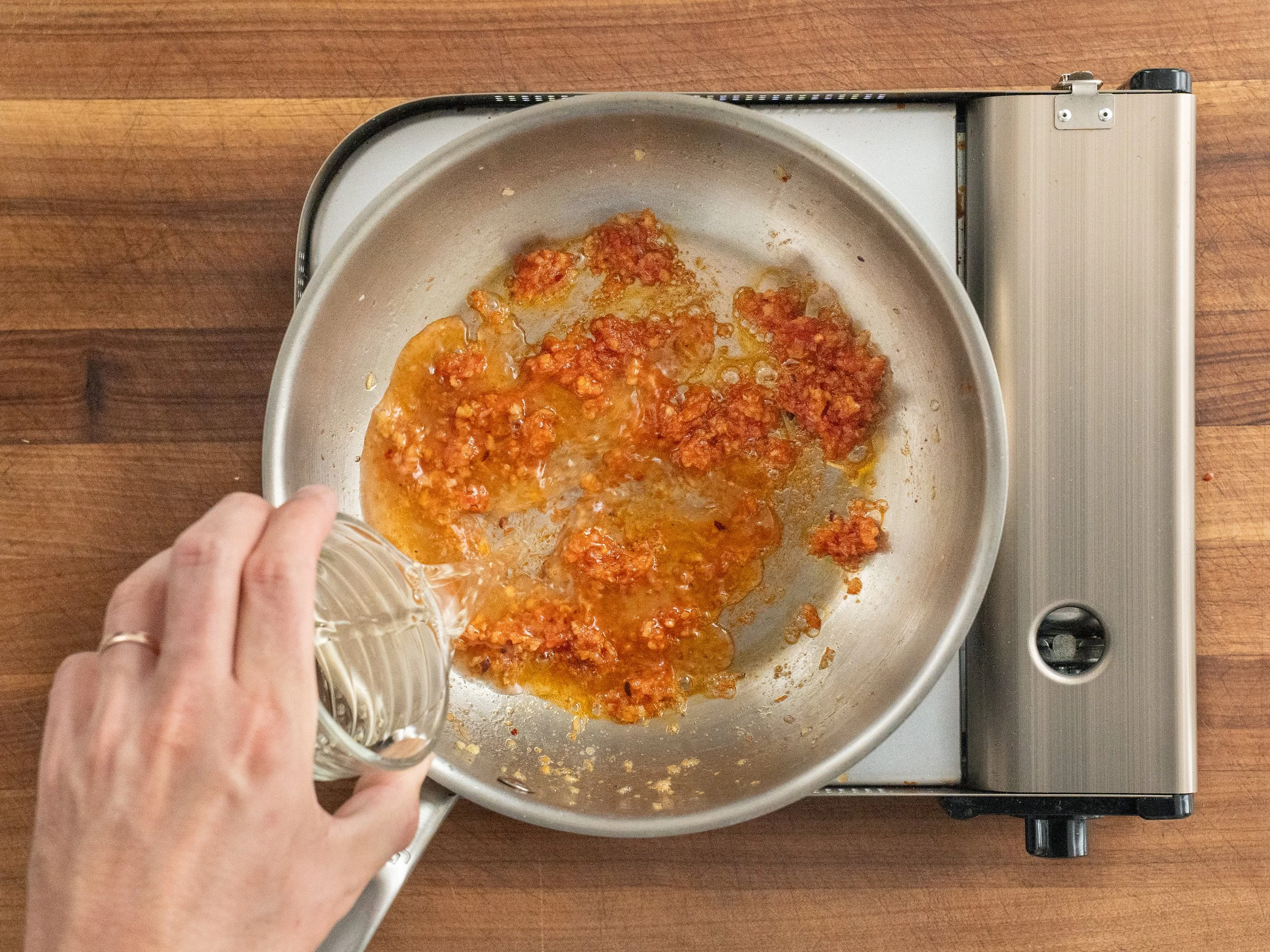
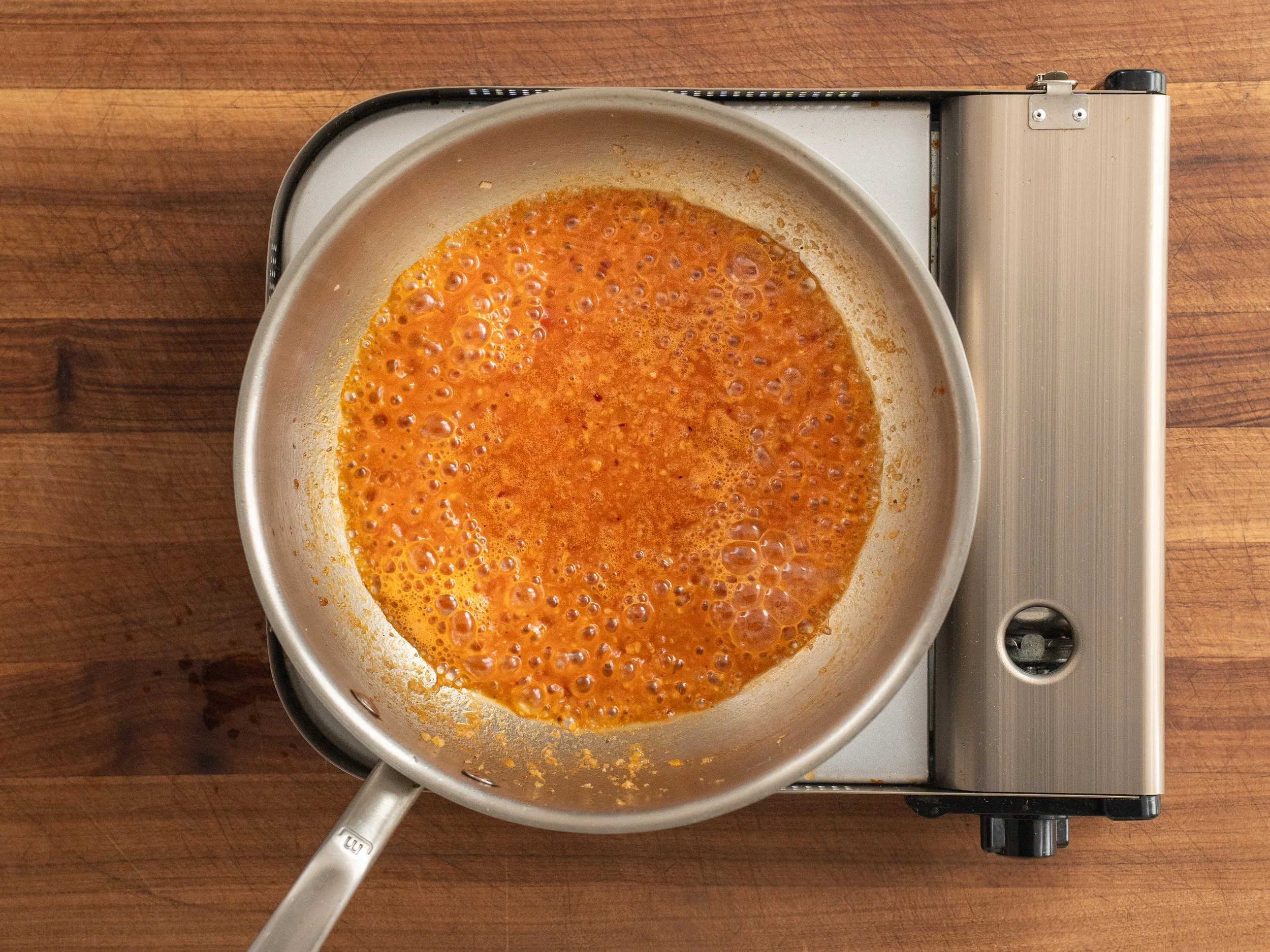
6. Deglaze with Wine. Once the tomato paste is glazing the bottom of the pot, pour in 100g dry white wine and bring it up to a hard boil while scraping up any tomato bits from the bottom of the pot.
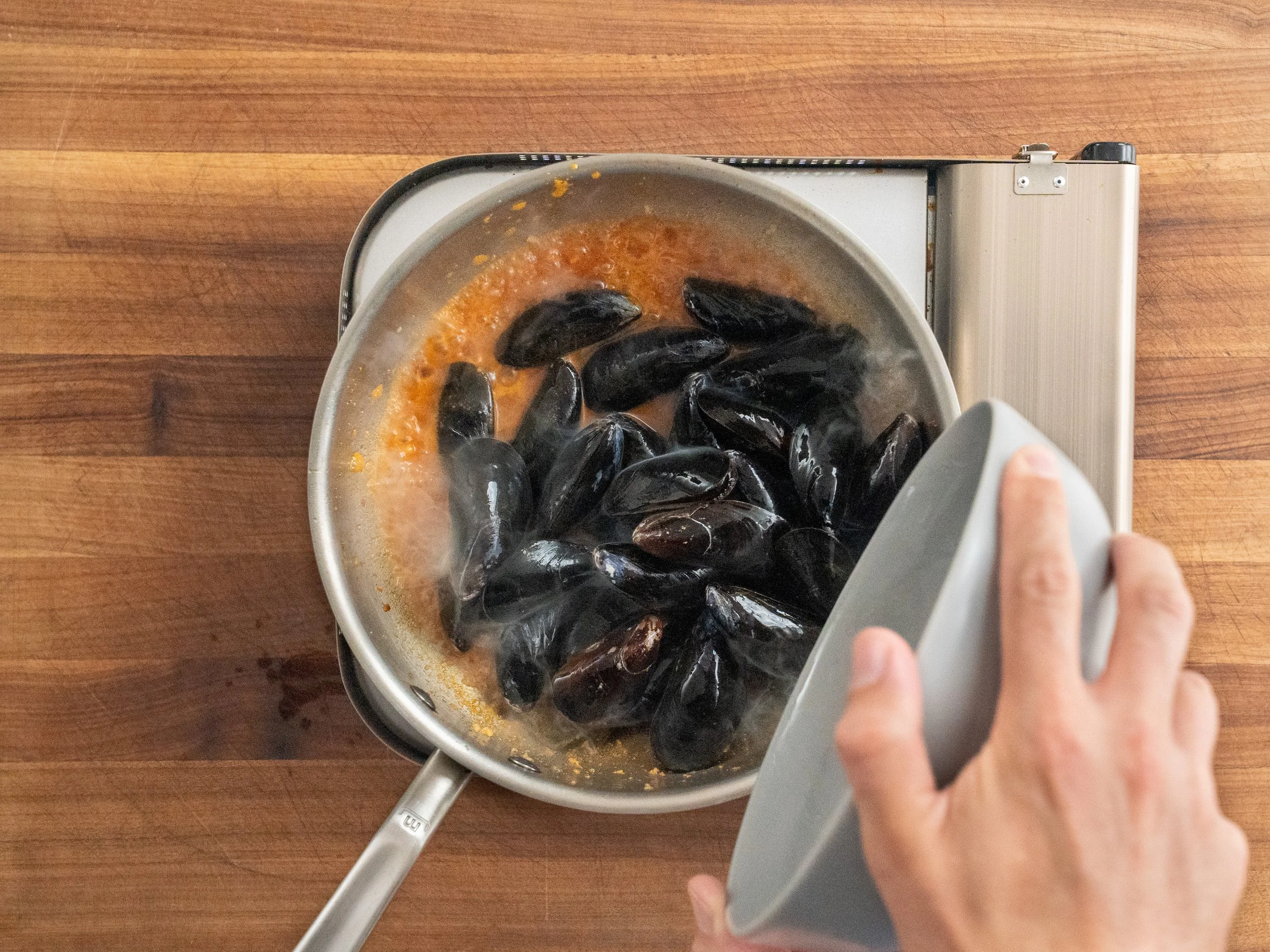
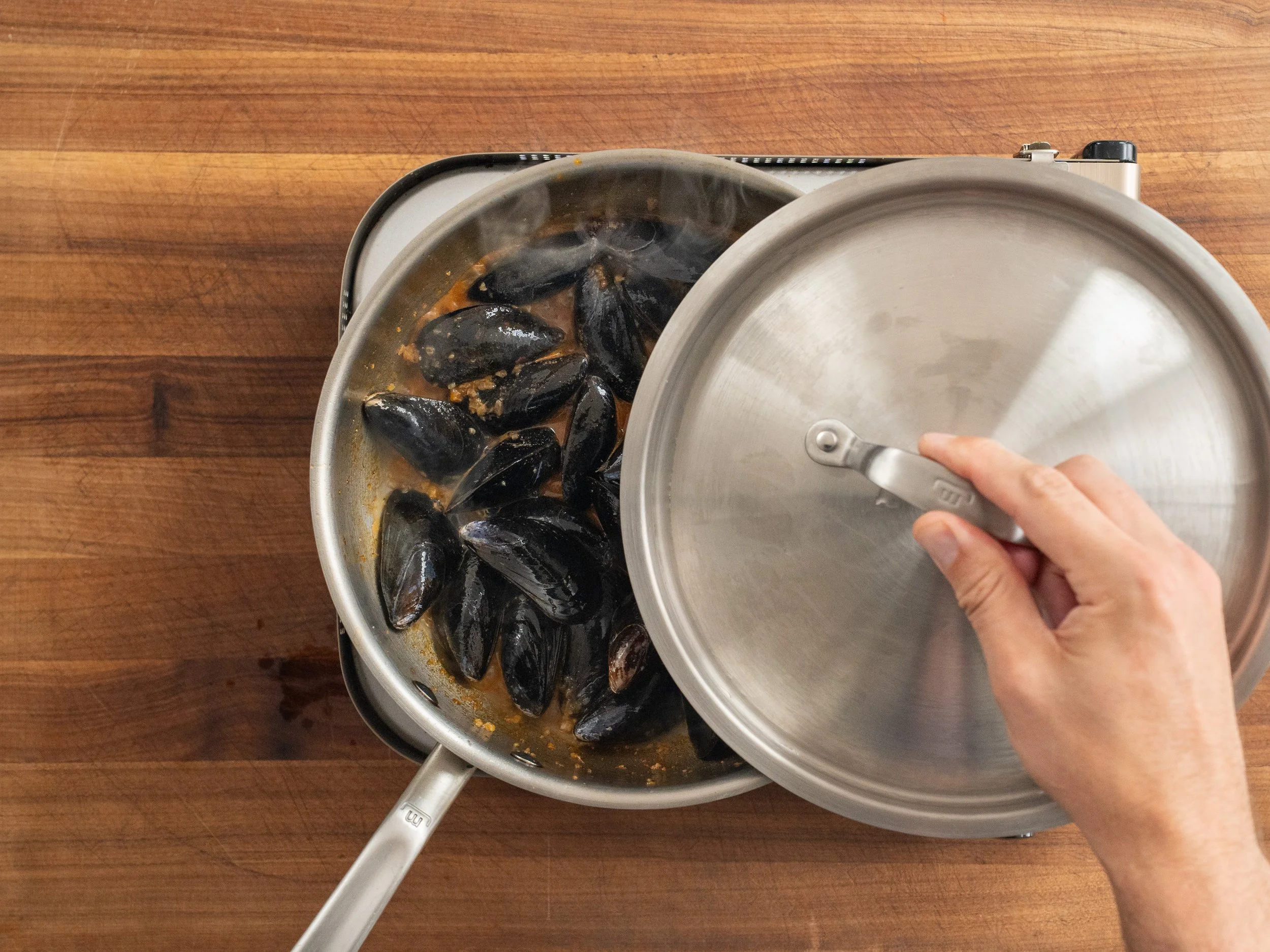
7. Add the Mussels. Once the wine is boiling, add in the cleaned and purged mussels, bring the liquid back to a boil, put on a tight-fitting lid, and steam for about 2 and a half minutes, or until the shells have opened and the mussel meat looks plump and just cooked through. Cook time can vary by about 30 seconds in either direction, so stay frosty and pay attention.
How do I know when mussels are cooked? Don’t panic. Mussels don’t all open at exactly the same time. If some haven't opened, give the pan a shake, put the lid back on, and steam for another 30 seconds. If there are still a few stragglers after that, take a closer look. If a mussel is still fully closed, toss it. If it’s partially open and the meat looks plump and cooked, you can pry it open and eat it, but I’d still err on the side of caution. Don’t keep cooking the whole pot to chase one or two barely opened mussels.
Properly cooked mussels look like plump little pillows sitting in one side of the shell. If the meat is still attached to both sides, it’s undercooked and the texture will be snotty. Keep cooking a bit. Overall, I think people are a little too scared of overcooking mussels. It takes a little longer to ruin them than you'd think. Texture-wise, I actually think they’re worse when they’re undercooked, so I wouldn’t aim for the absolute minimum amount of cooking you can get away with. You want them plump and tender, but fully cooked through.
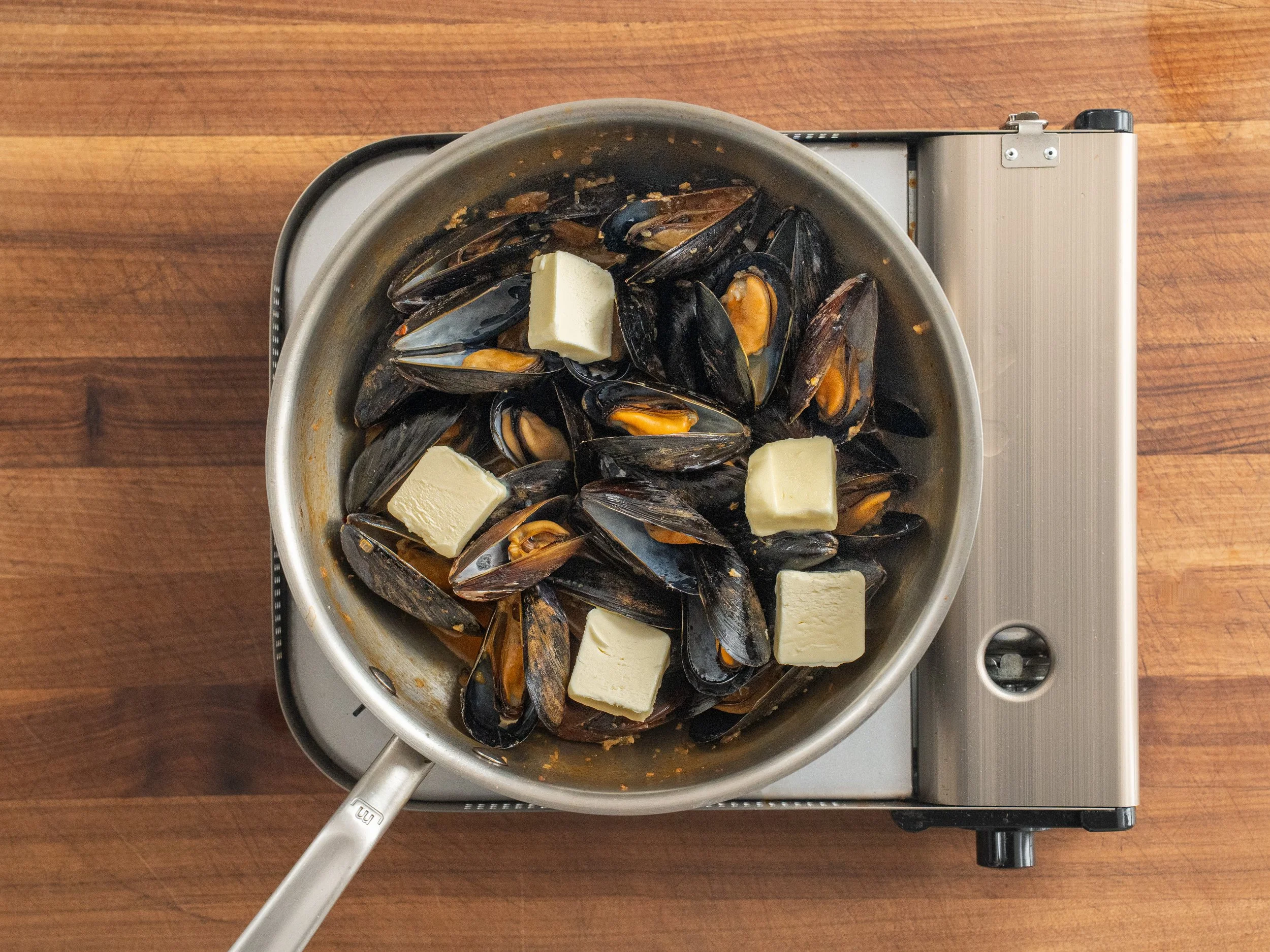
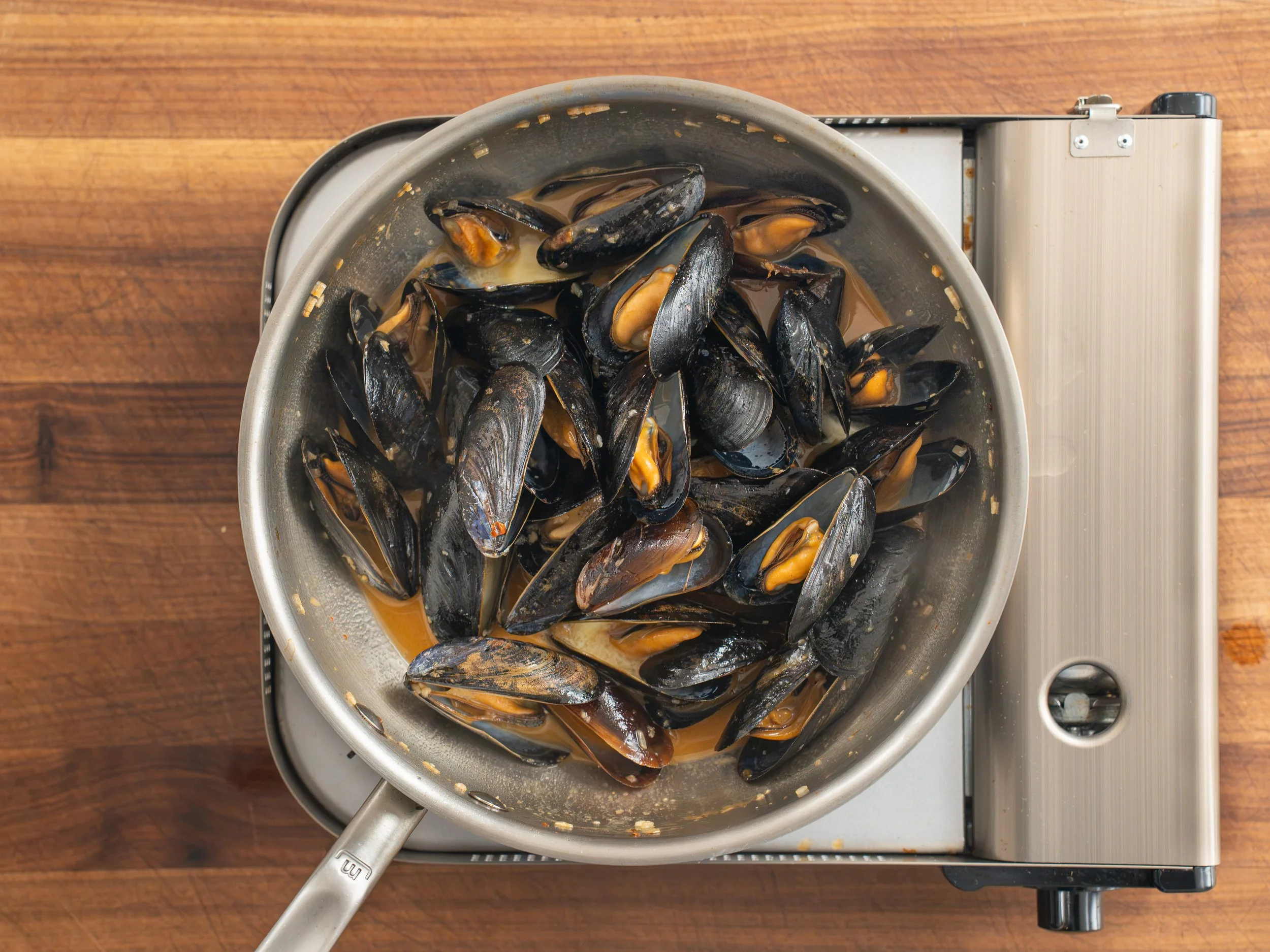
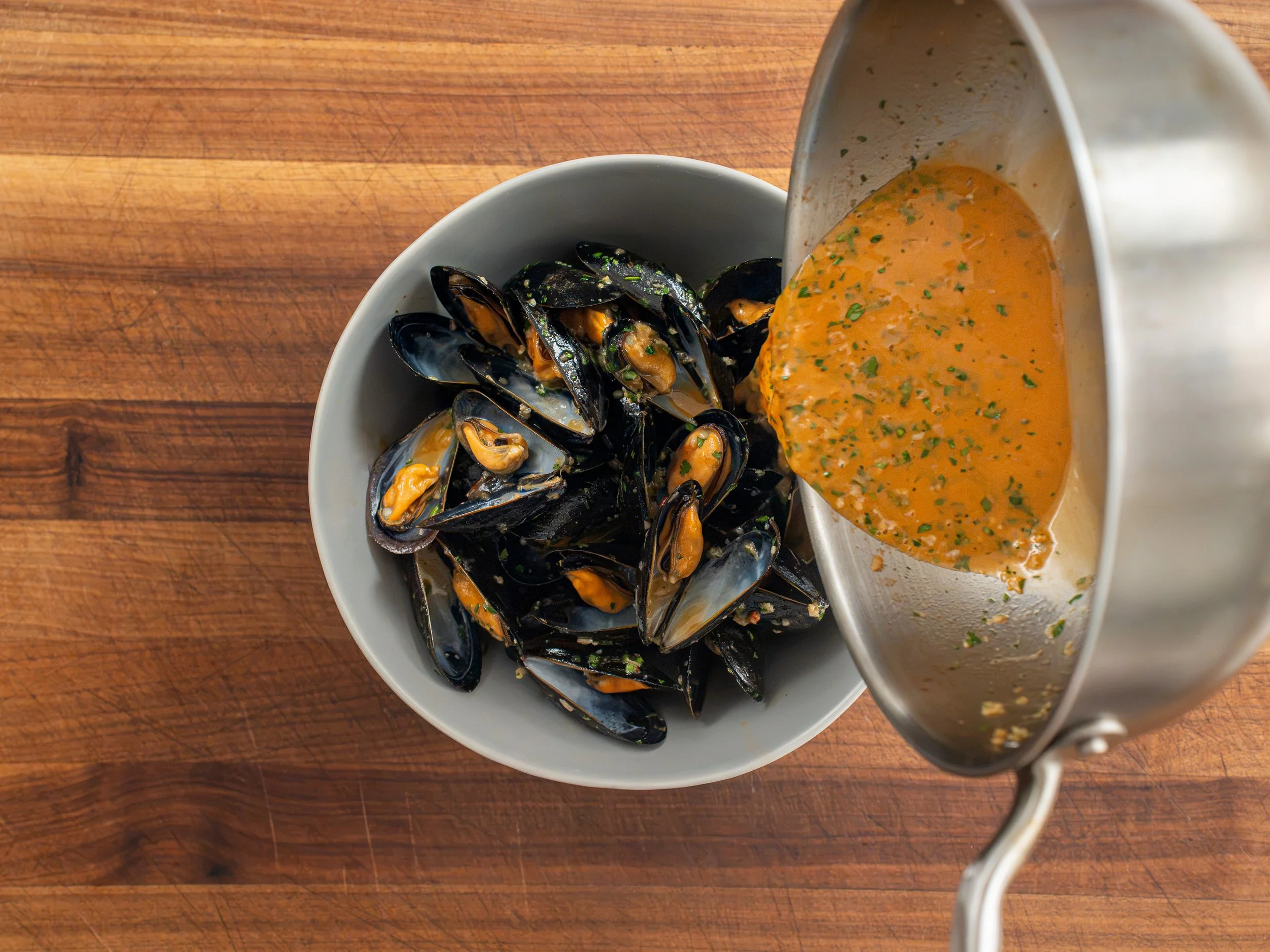
8. Emulsify the Butter. Drop heat to low, then add in 60g cubed cold butter, pop on the lid and swirl the pan to emulsify the butter for around a minute or until the butter is fully melted. This agitation ensures the butter breaks down into tiny droplets as it melts which will keep it held in emulsion in the broth. This also gives you an extra silky texture.
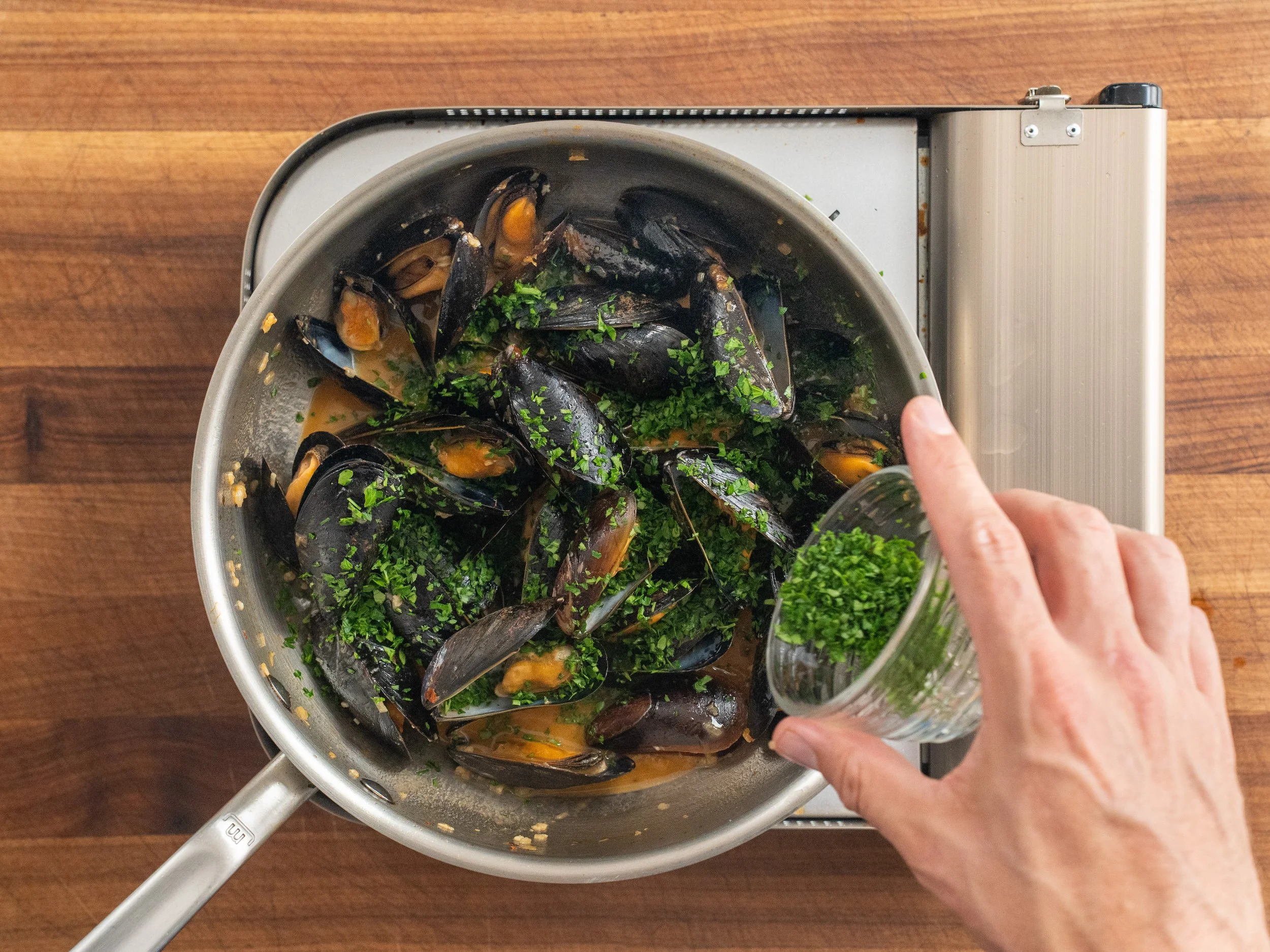
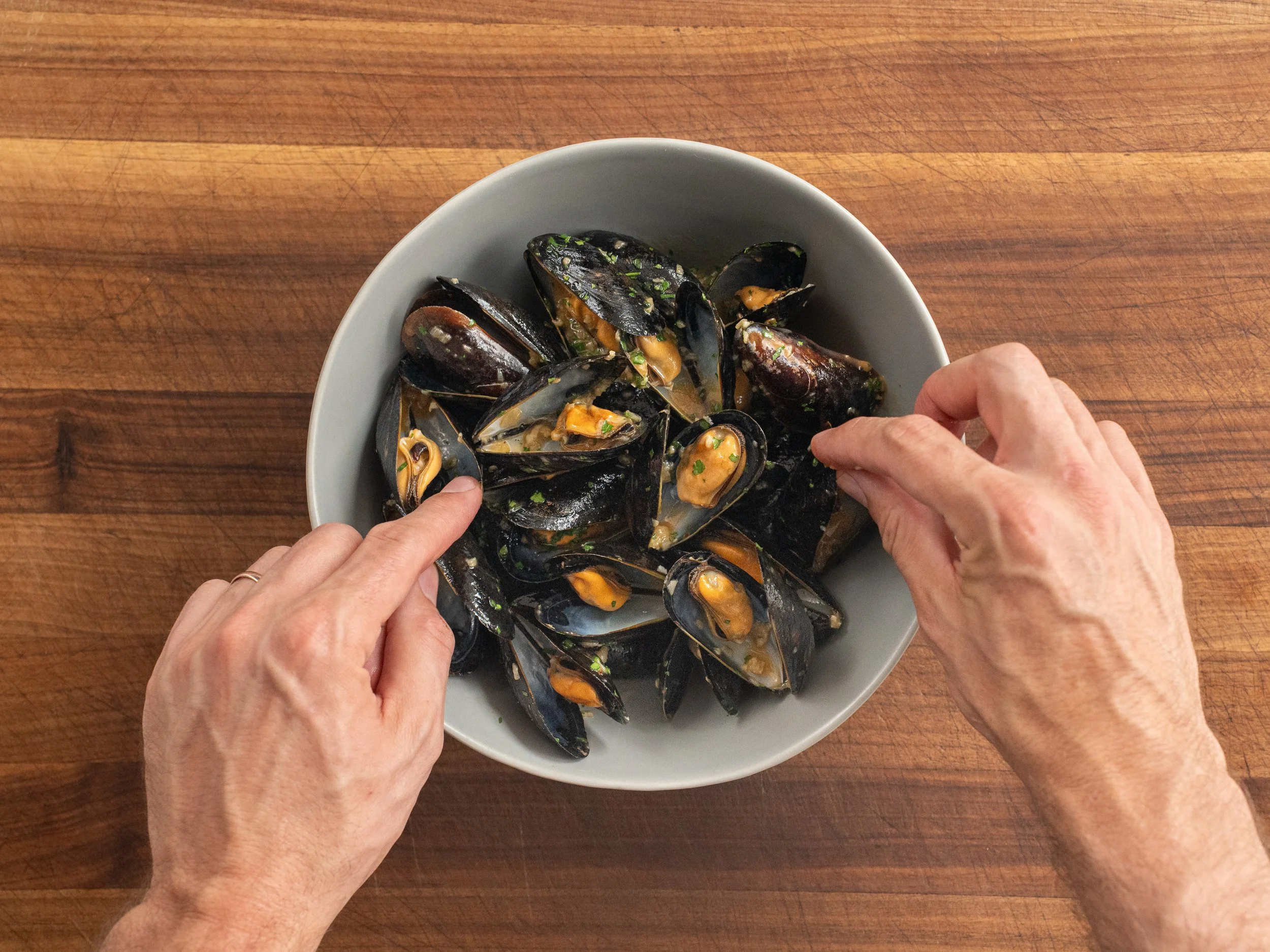
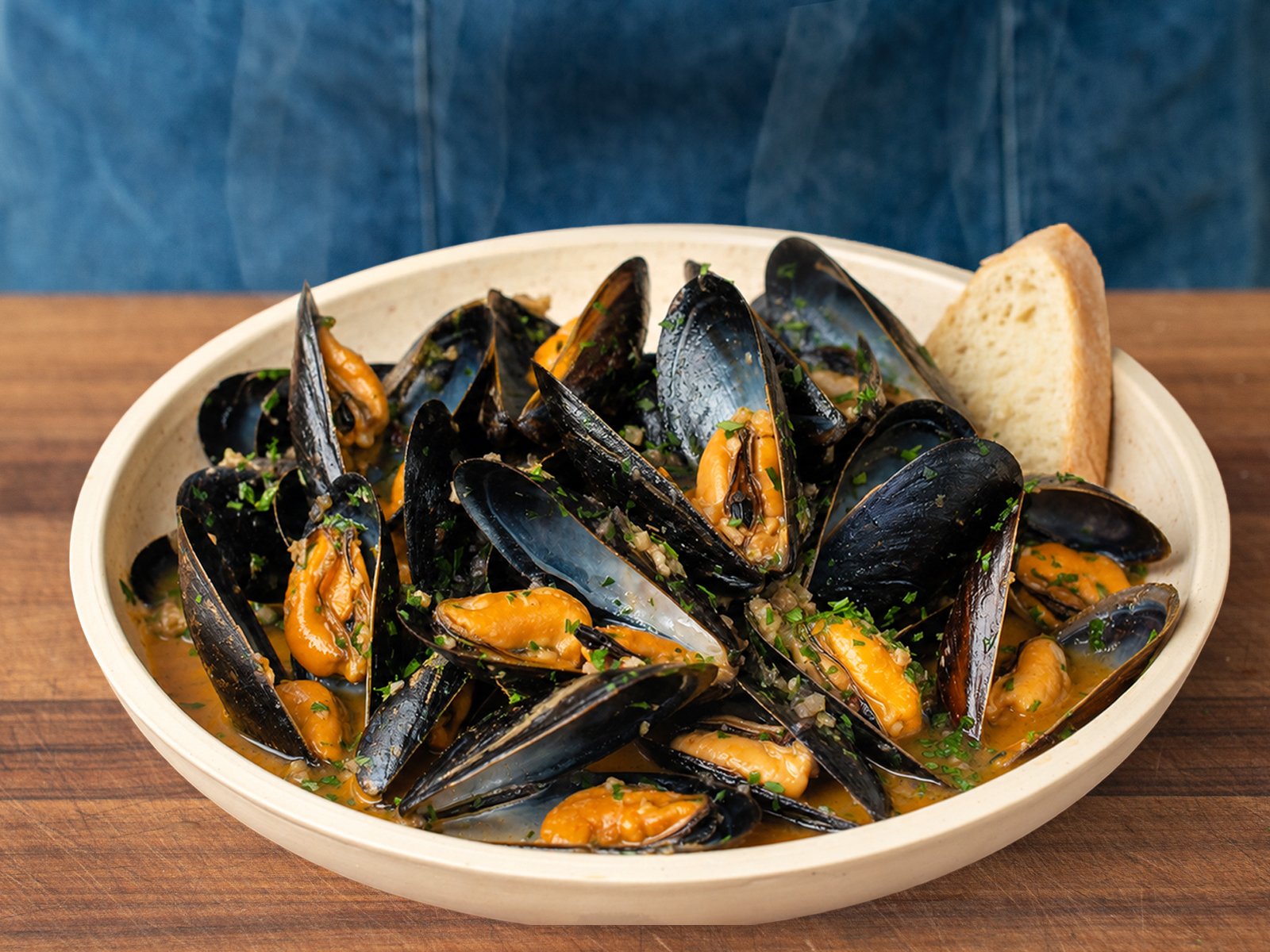
9. Finish and Serve. Add 10g chopped fresh parsley, then taste the broth and adjust the salt if needed. Serve right away with the toasty crusty bread for soaking up the beautiful broth.
Notes: The mussels throw off a lot of salty brine as they open, so taste before you reach for the salt. To season without stirring up all the mussels, tilt the pan so the broth pools to one side, drop the salt into that pool, and jostle the pan to spread it around.
You should have enough broth at this point for dipping or topping pasta, but if not, feel free to add a splash of clam juice or chicken broth to bulk it out. If you do, remember to taste again for seasoning before serving.
Storage & Make-Ahead
Steamed mussels are an à la minute kind of dish that exists in a beautiful, fleeting moment in time, so I wouldn’t plan on making them ahead or storing leftovers.
That said, you can get ahead by soaking and cleaning the mussels earlier in the day, then holding them in the fridge until you’re ready to cook. Just do this within 48 hours of buying them, keep them cold the whole time, and don’t seal them in anything airtight. They’re alive, and they don’t keep especially well in a home fridge.
My Go-To Gear
Below are the tools I actually use when making this recipe. Some of these are affiliate links, which means I may earn a small commission if you purchase through them—at no extra cost to you.
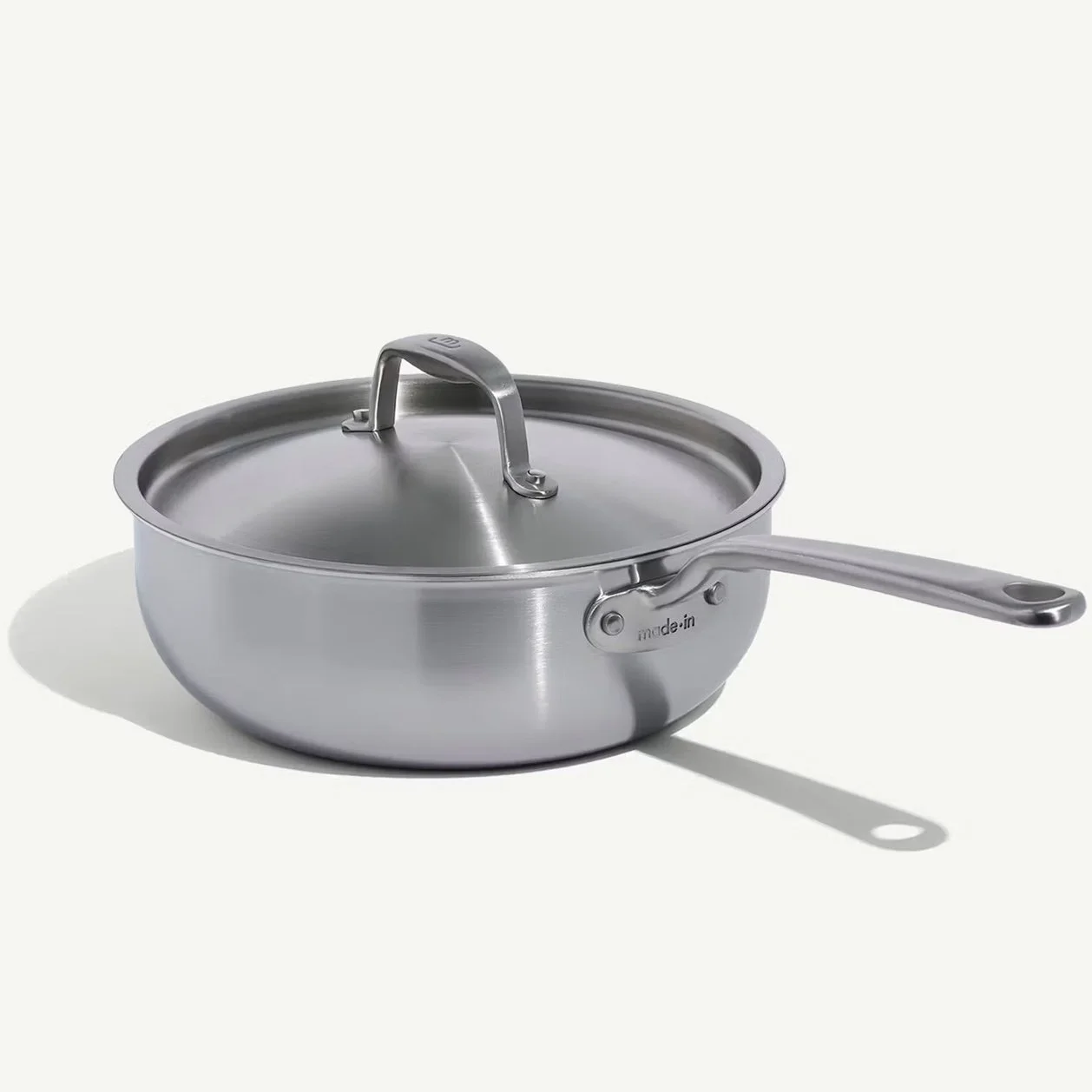
You need something with a lid so the mussels steam, and a rounded saucier makes it easy to swirl the butter into an emulsion at the end. Anything wide enough to hold the mussels in a shallow layer works.
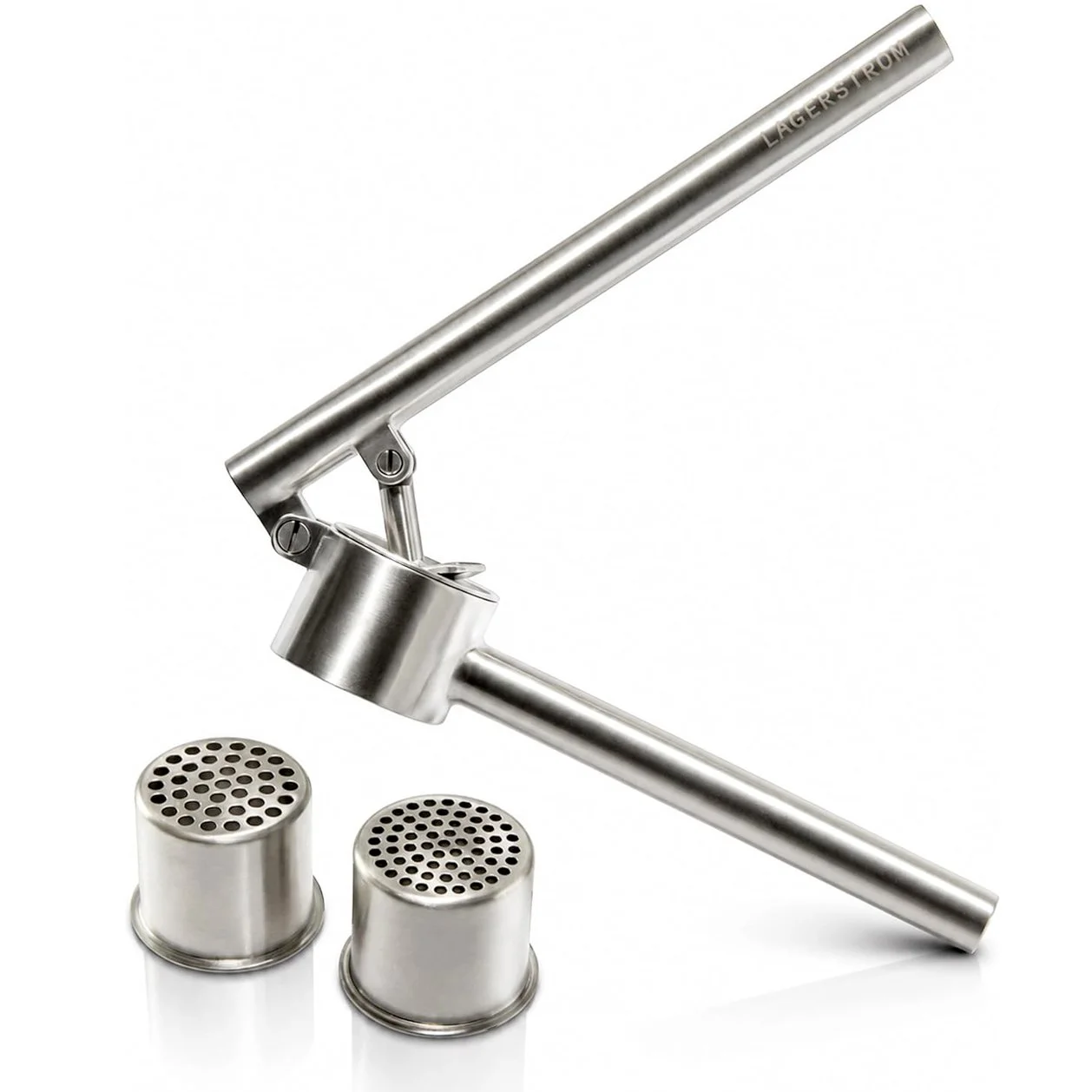
A good garlic press will speed up this recipe. This is the garlic press I designed and I think it’s perfect for any recipe that requires garlic. Use the larger-holed basket for this recipe to get a perfect mince.
Frequently Asked Questions
Can I double or triple this recipe? Yes, easily. For two entree portions (or 4 appetizer portions) use a dutch oven instead of a saucier and 2 or 3x the recipe.
What kind of bread should I serve with this? A plain crusty baguette is my pick. I'd skip sourdough here. It's a little too chewy for dragging through the broth.
Can I use dried parsley instead of fresh? No. Go fresh here. Dried parsley has almost no flavor and can taste a little grassy. Fresh parsley added at the very end brings brightness and a clean lift that makes the whole dish feel more alive. If you’re out of parsley, a little fresh chive would be nice in its place, but use less.